Structural Decision FrameworkFramework

Structural Decision Framework

How dentists actually think about your teeth.

A way to understand how your dentist actually thinks about your teeth: what's strong, what's pushing on it, how it's changing, and what'll keep it strongest five years from now.

Four ways to look at a tooth

Every dental decision is really four questions.

Every tooth, every fix, every treatment plan can be read through these four questions. Together they tell you whether a decision is protecting the long run, or just patching today.

01

Structure

How much strength does this tooth have left?

02

Force

What's pushing on this tooth every day?

03

Time

Where is this heading if nothing changes?

04

Stability

Which option will hold up best five years from now?

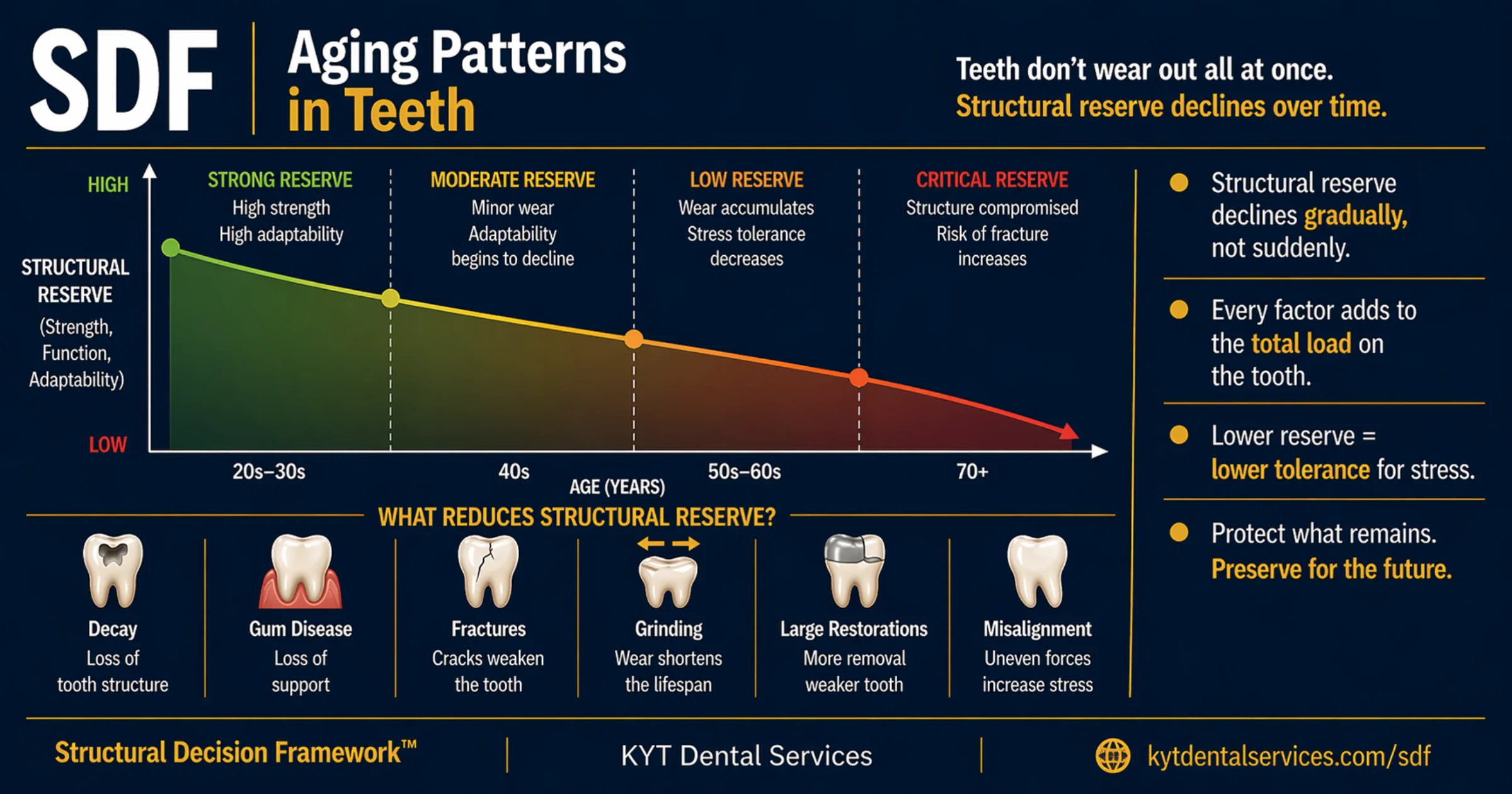
The SDF curve

Teeth get weaker slowly, not all at once.

The diagram below shows how teeth lose strength over time. Wear, grinding, fillings, and decay each take a little. The losses add up quietly, until something gives.
Aging Patterns in Teeth

Featured lessons
Start with the lessons.

View all lessons
Aging Patterns in Teeth

SDF-01

Aging Patterns in Teeth

Teeth lose strength as you age. The losses add up.

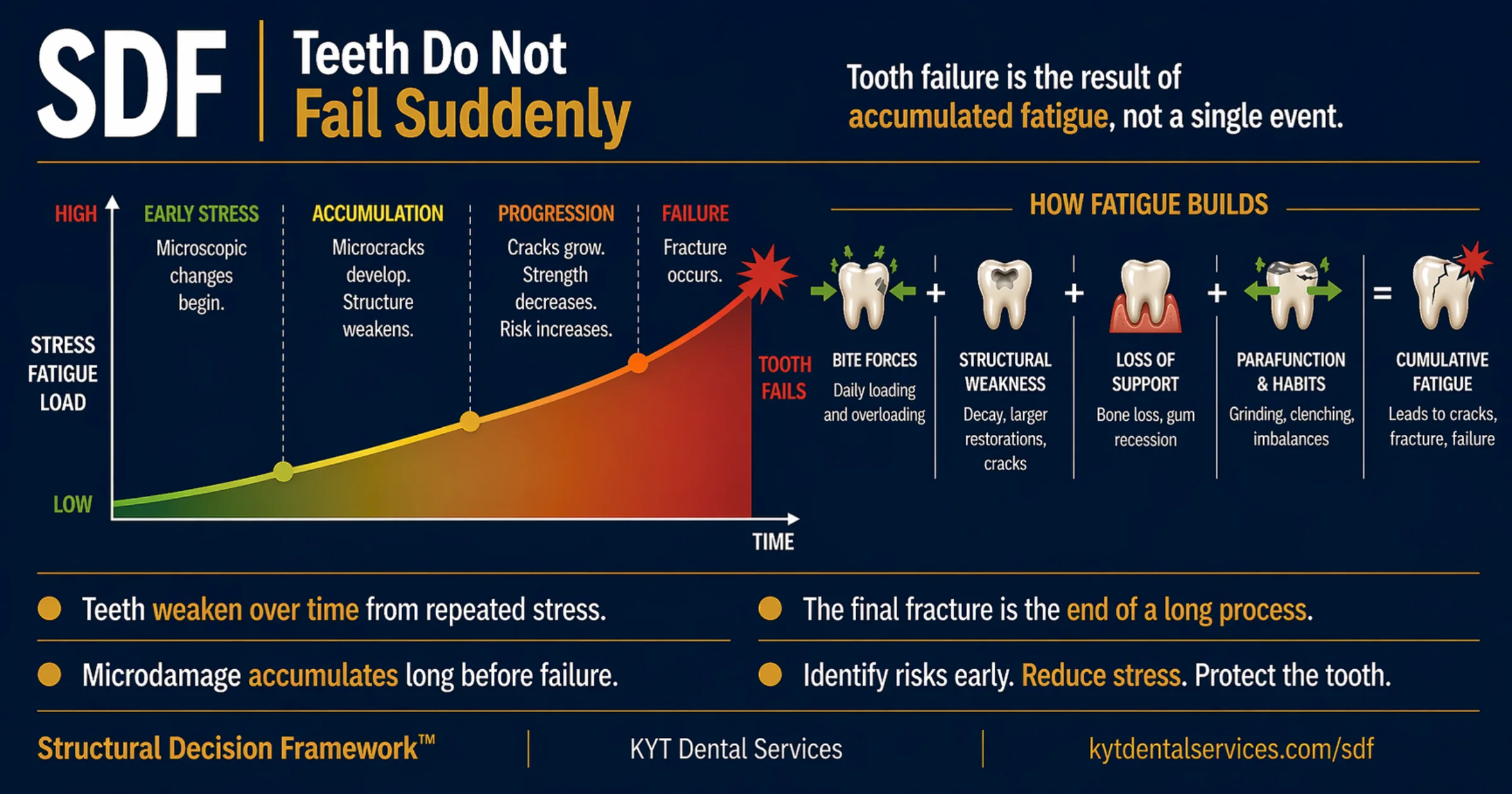
How Teeth Actually Fail

SDF-02

How Teeth Actually Fail

Teeth don't break in a single moment. They fail at the end of a long process.

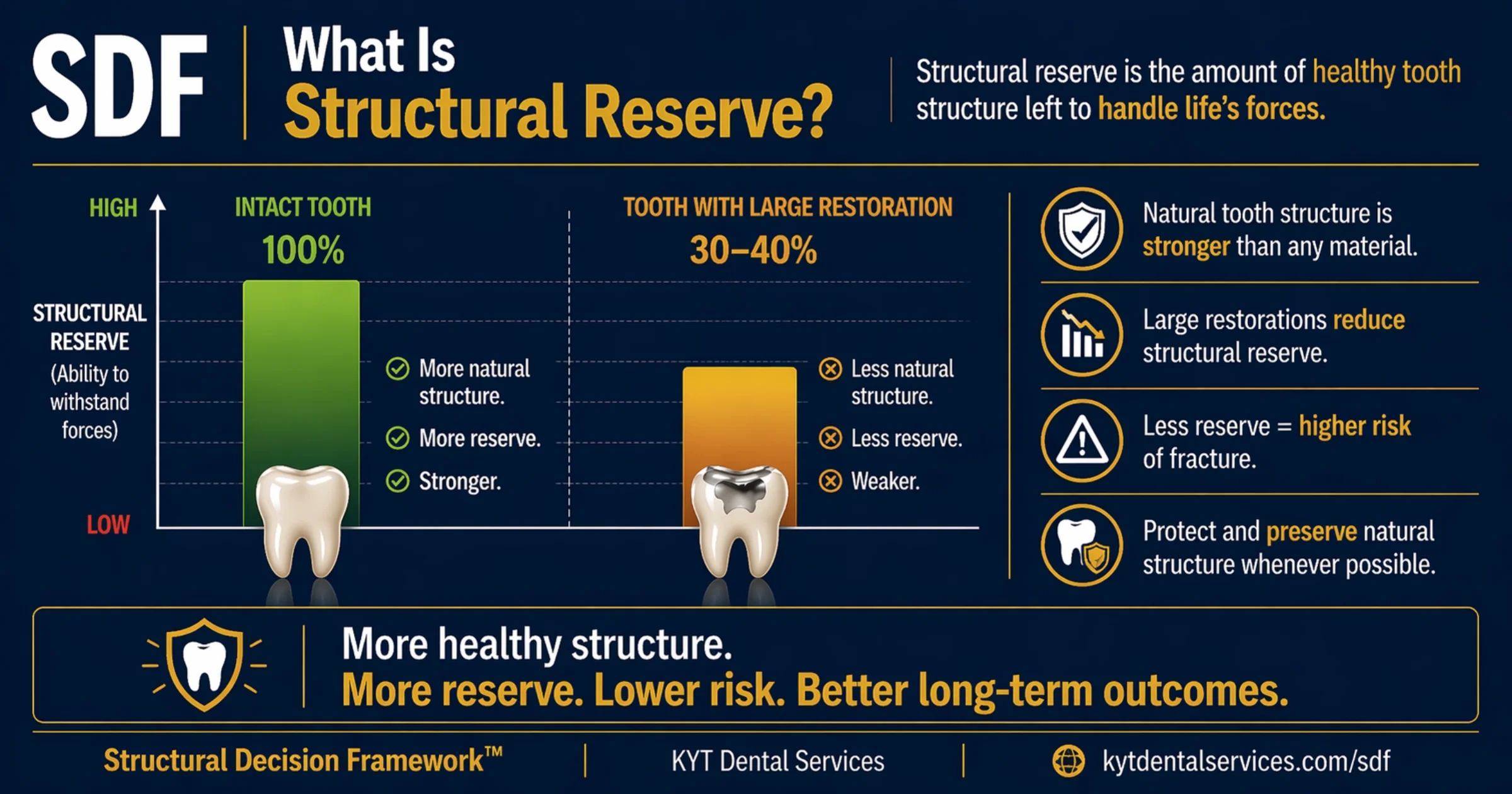
What Is Structural Reserve?

SDF-03

What Is Structural Reserve?

Structural reserve is how much healthy tooth you have left to handle life's forces.

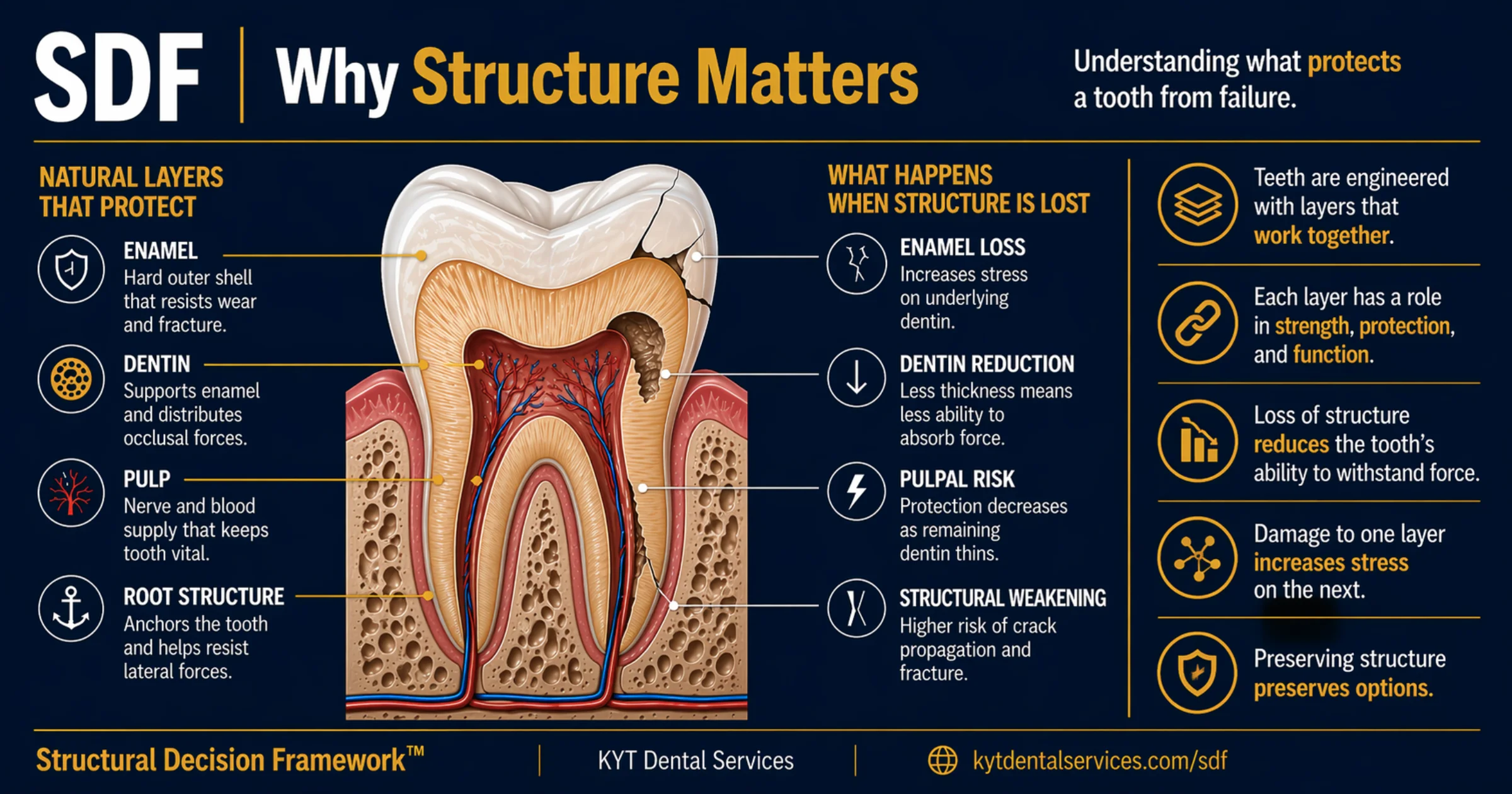
Why Structure Matters

SDF-04

Why Structure Matters

A tooth isn't one thing, it's four layers working together. Lose any of them, and the others have to work harder.

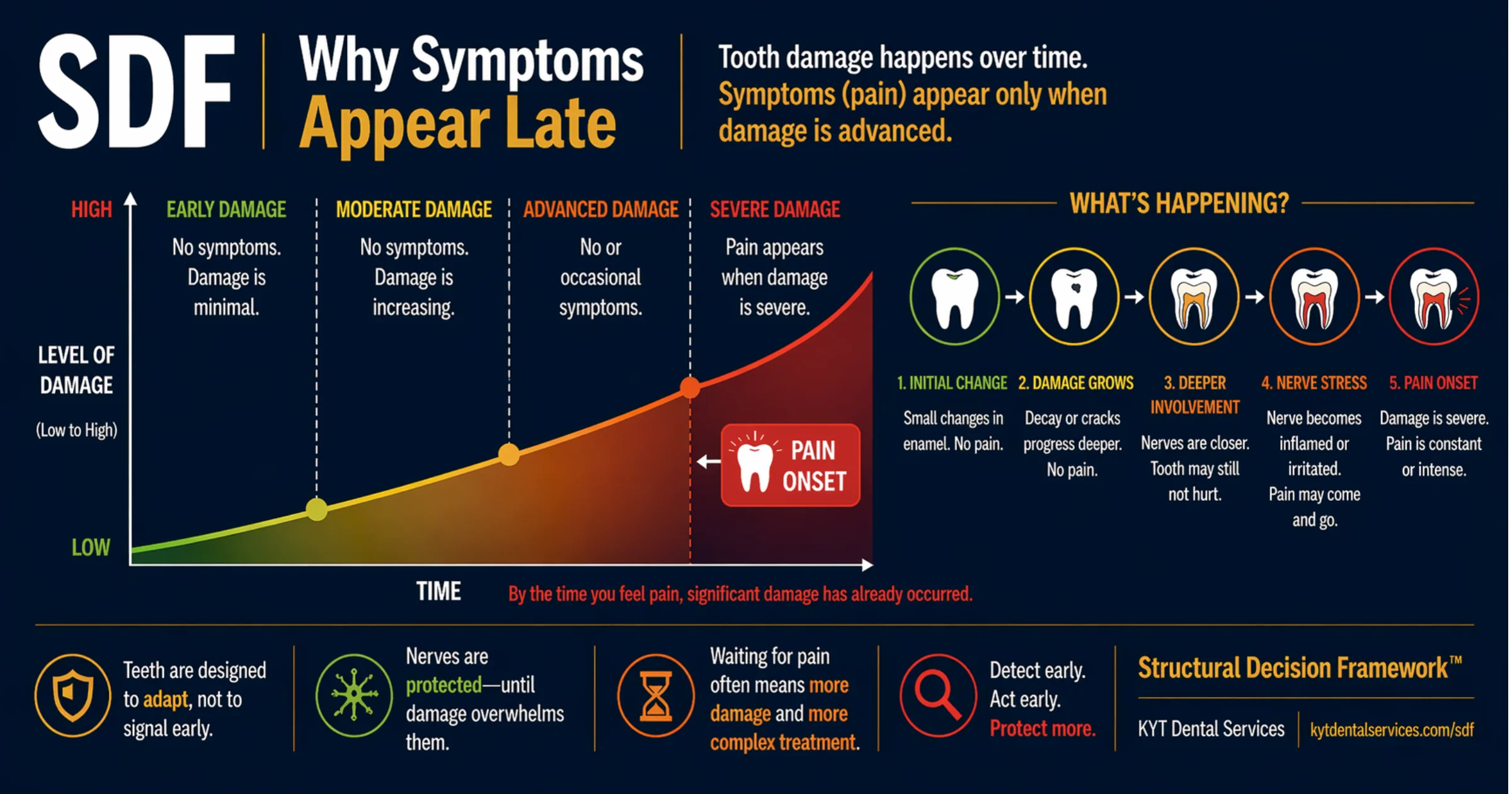
Why Symptoms Appear Late

SDF-05

Why Symptoms Appear Late

By the time a tooth hurts, the damage isn't starting, it's almost done.

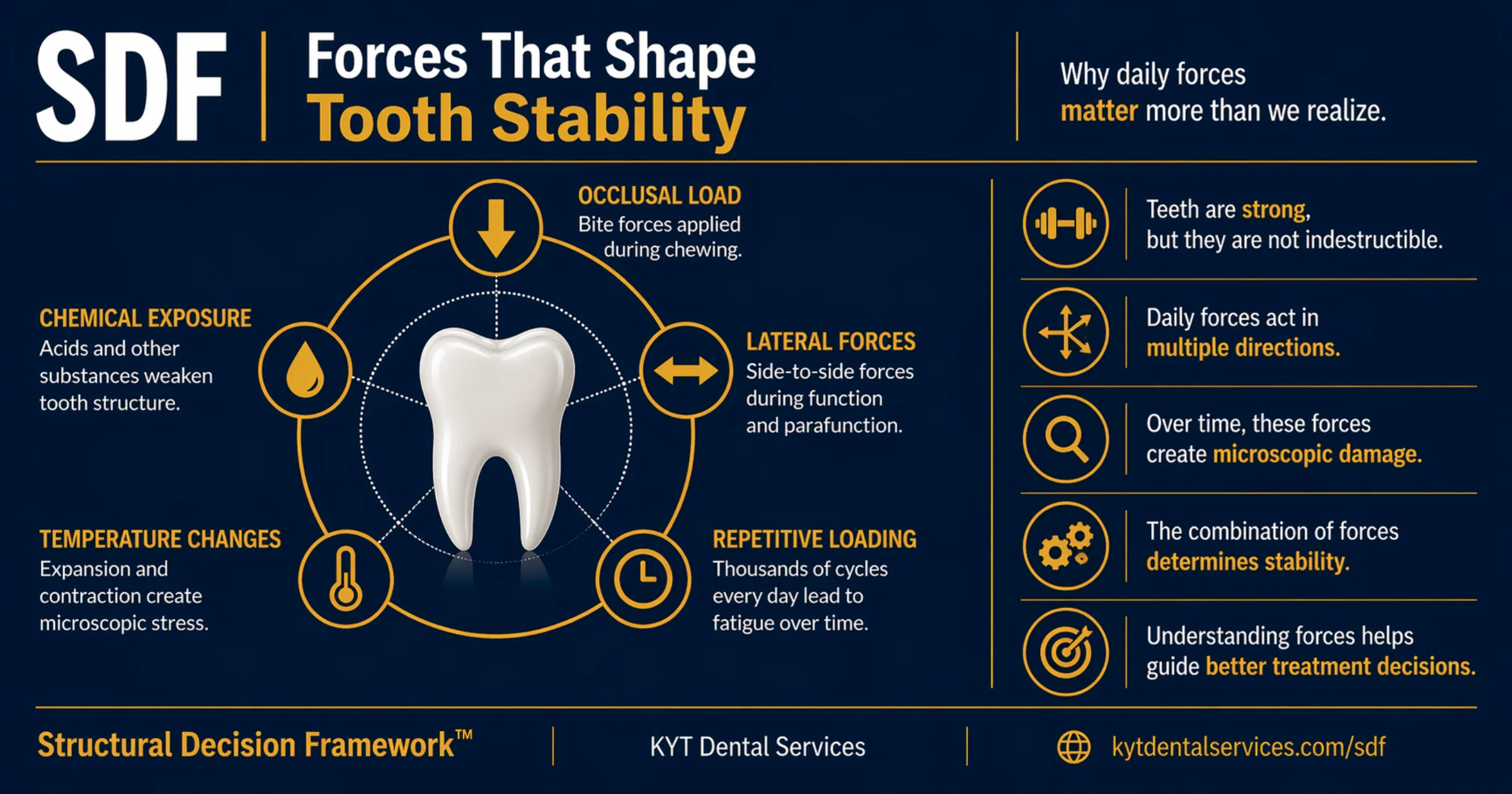
Forces That Shape Tooth Stability

SDF-06

Forces That Shape Tooth Stability

Your teeth handle dozens of forces every day. The mix of all of them, not any single one, is what shapes how long they last.

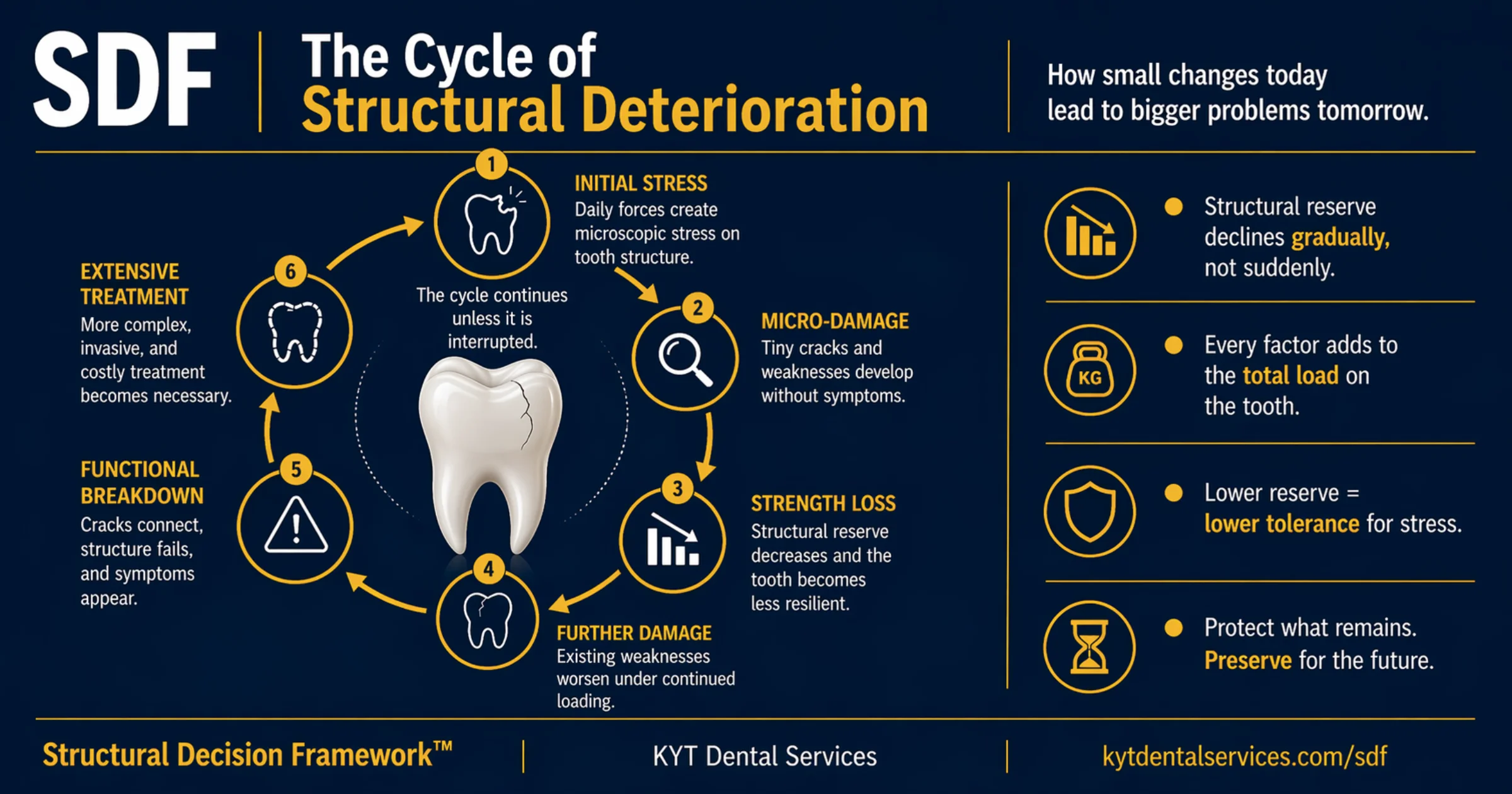
The Cycle of Structural Deterioration

SDF-07

The Cycle of Structural Deterioration

Tooth damage isn't a one-time event. It's a cycle, and each stage quietly sets up the next one.

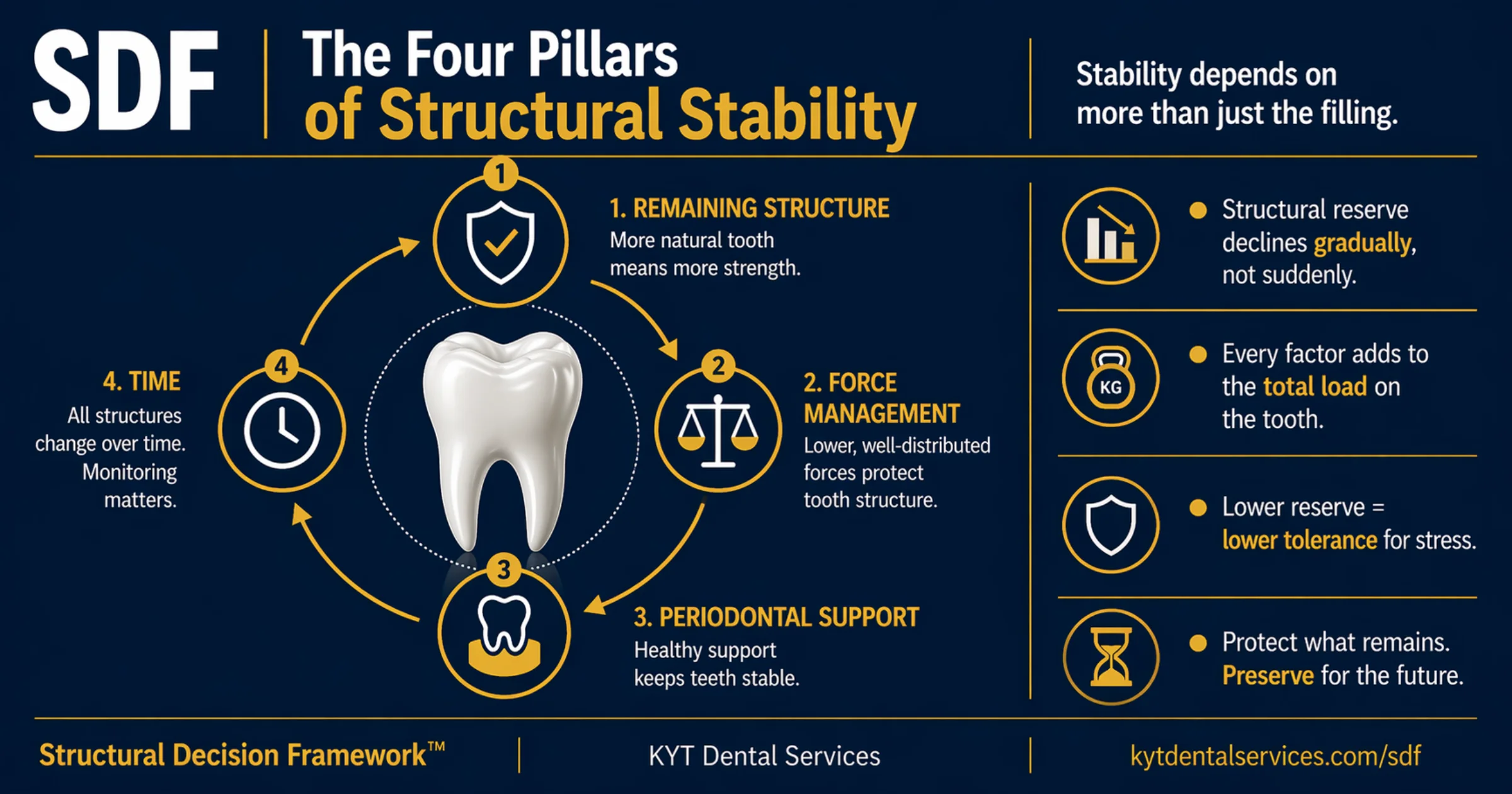
The Four Pillars of Structural Stability

SDF-08

The Four Pillars of Structural Stability

A tooth's stability isn't one thing. It's four, and they only work when they all work.

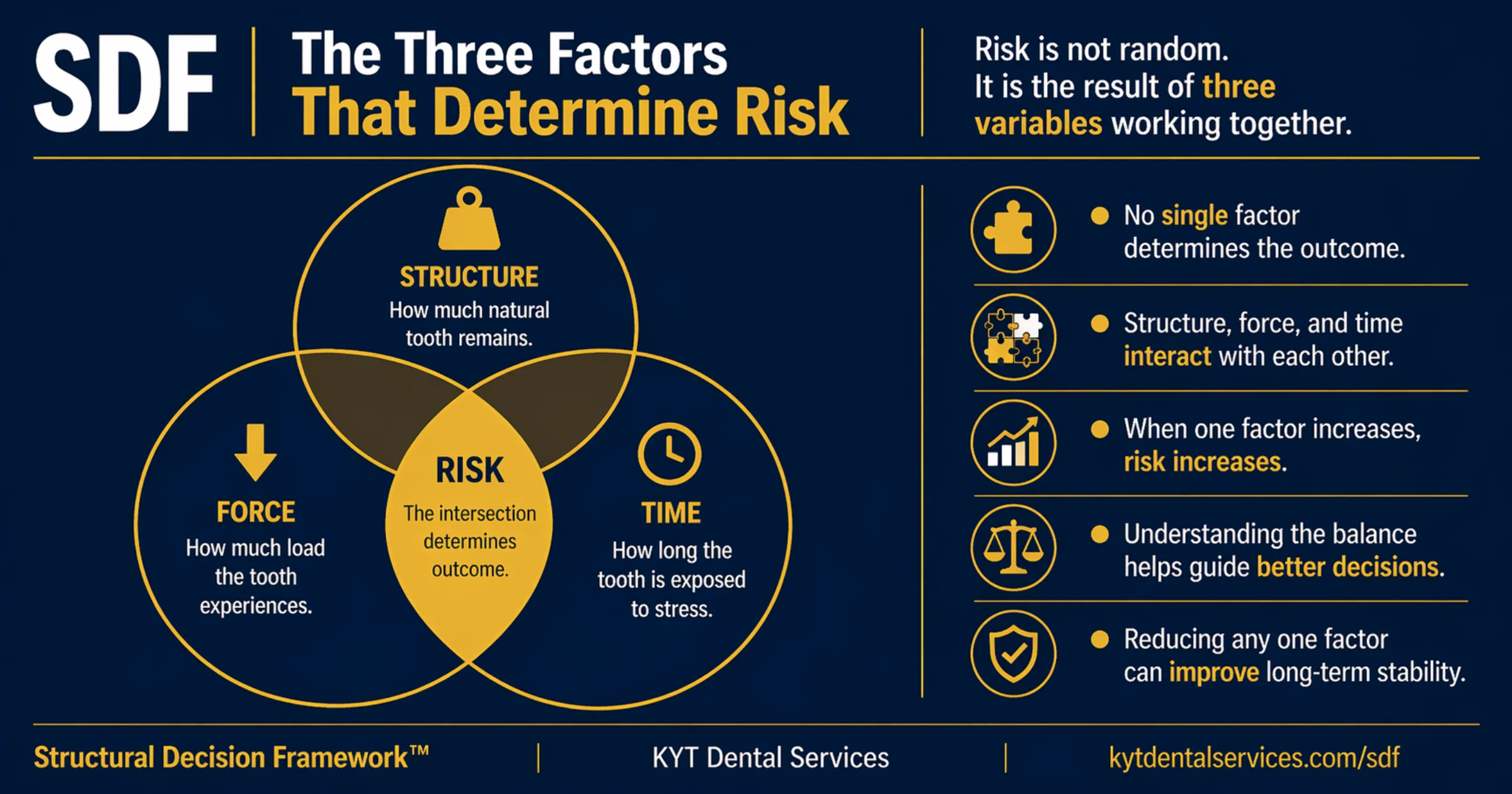
The Three Factors That Determine Risk

SDF-09

The Three Factors That Determine Risk

Tooth risk isn't random. It's structure × force × time, and the loudest of the three is usually the most worth fixing.

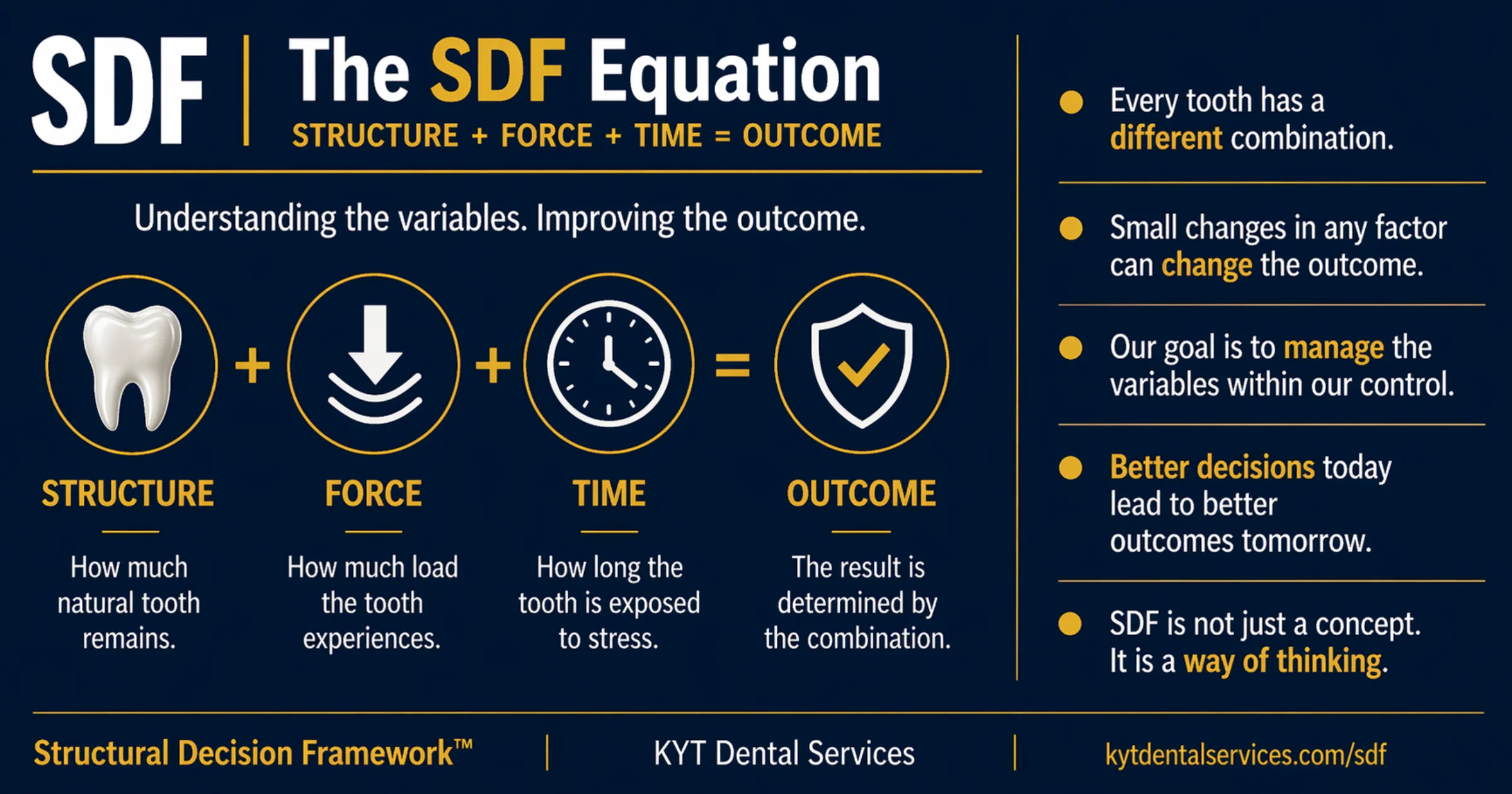
The SDF Equation

SDF-10

The SDF Equation

Structure + Force + Time = Outcome. That's the whole framework in one line, and the lens behind every treatment decision.

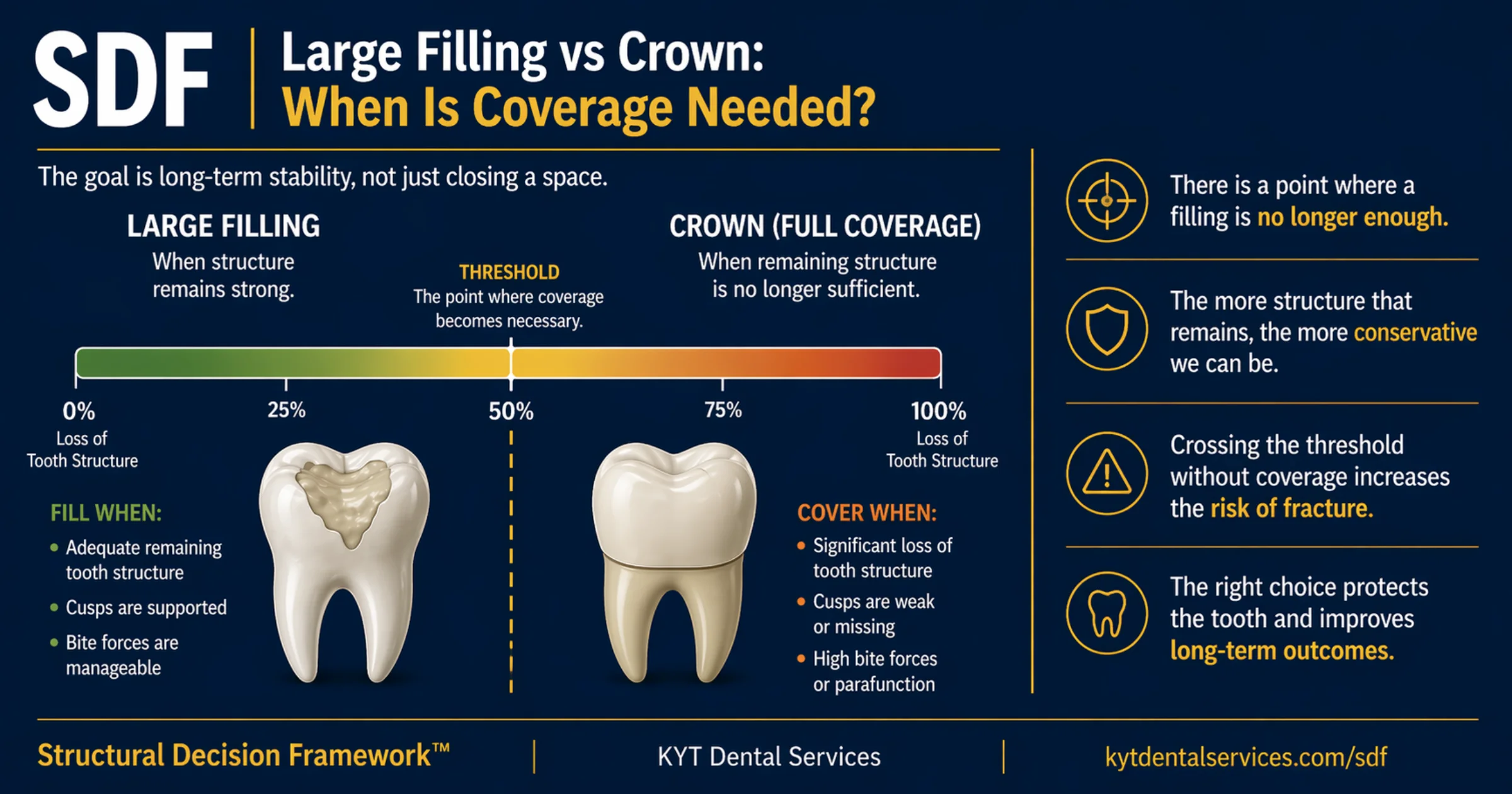
Large Filling vs Crown: When Is Coverage Needed?

SDF-11

Large Filling vs Crown: When Is Coverage Needed?

There's a point where a filling stops being enough. The question isn't if, it's where the threshold is for your tooth.

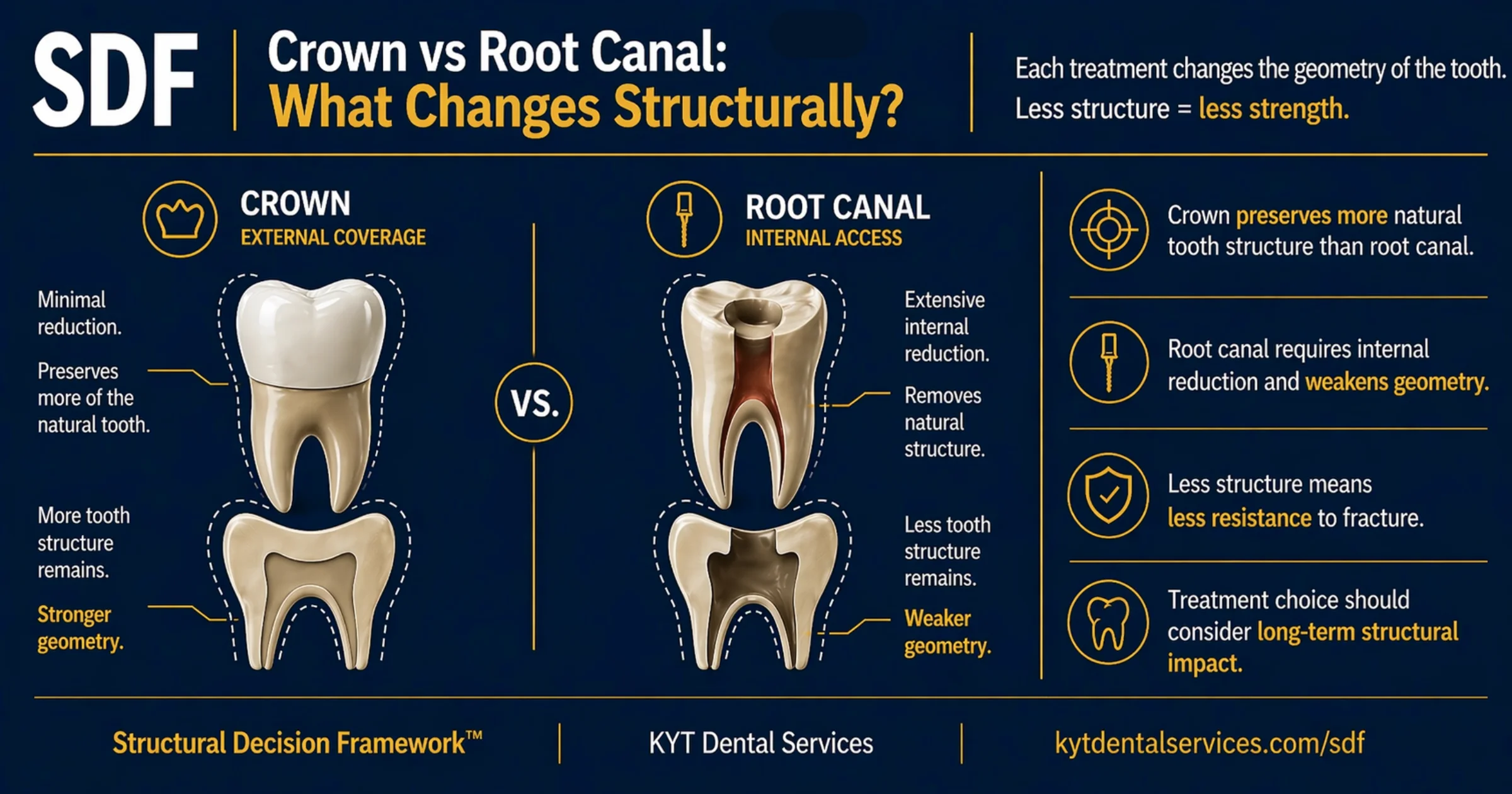
Crown vs Root Canal: What Changes Structurally?

SDF-12

Crown vs Root Canal: What Changes Structurally?

A crown shaves the outside. A root canal hollows out the inside. Both work, but one preserves more of the tooth than the other.

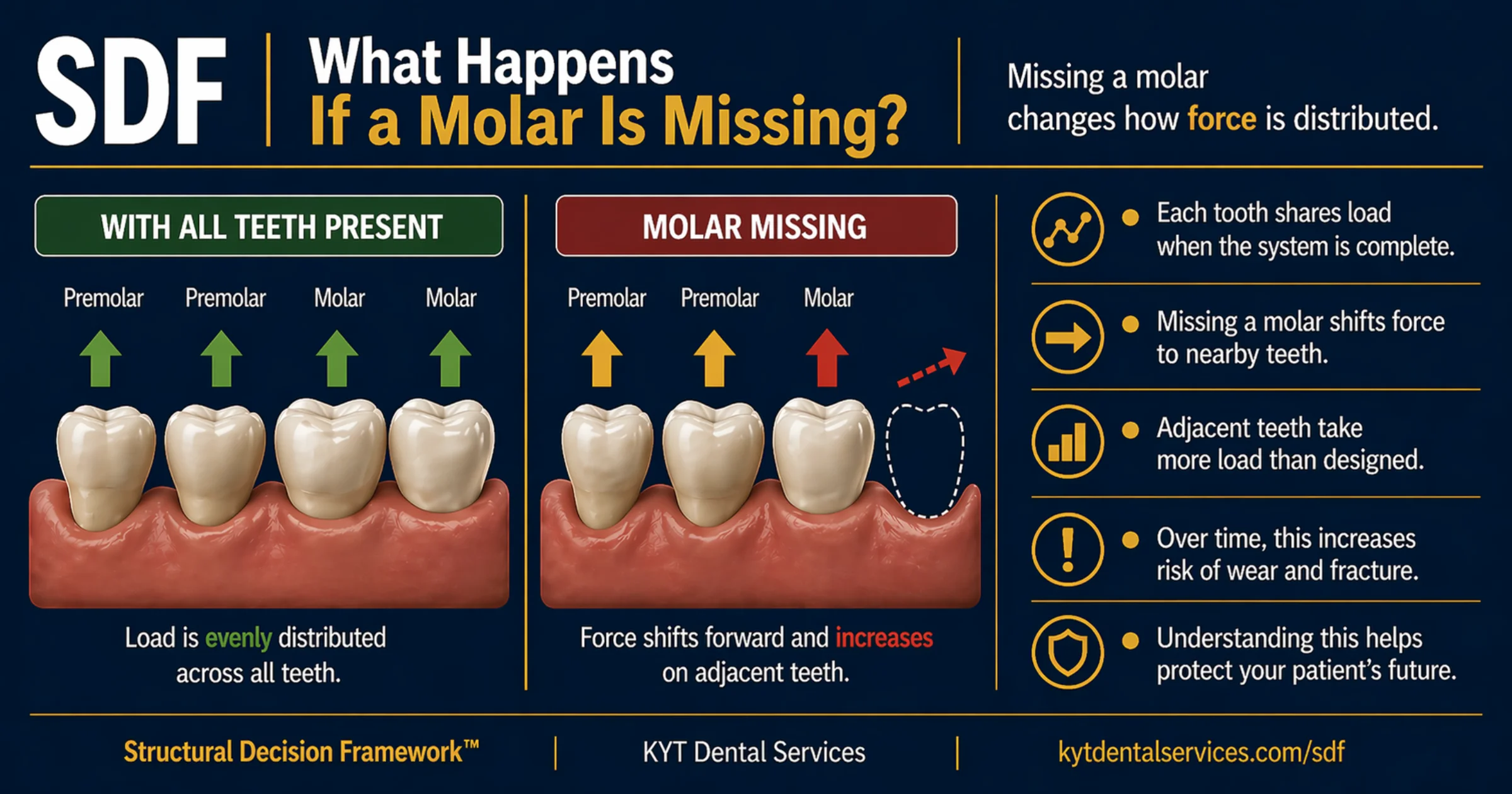
What Happens If a Molar Is Missing?

SDF-13

What Happens If a Molar Is Missing?

A missing molar isn't just a gap, it's a force redistribution. The teeth that are still there start doing more work than they were designed to.

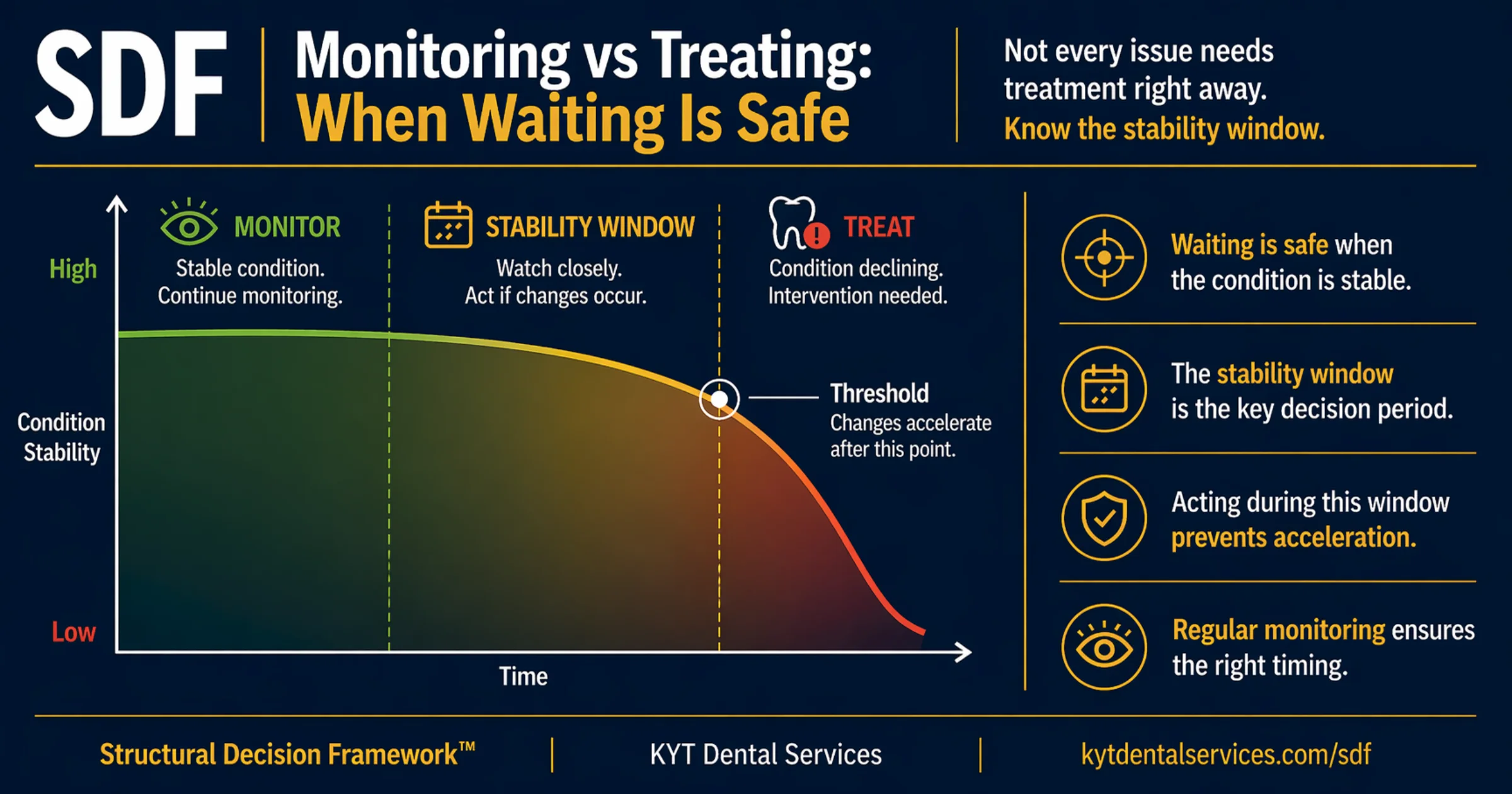
Monitoring vs Treating: When Waiting Is Safe

SDF-14

Monitoring vs Treating: When Waiting Is Safe

Not every issue needs treatment right away. Some need watching, and the trick is knowing when watching stops being enough.

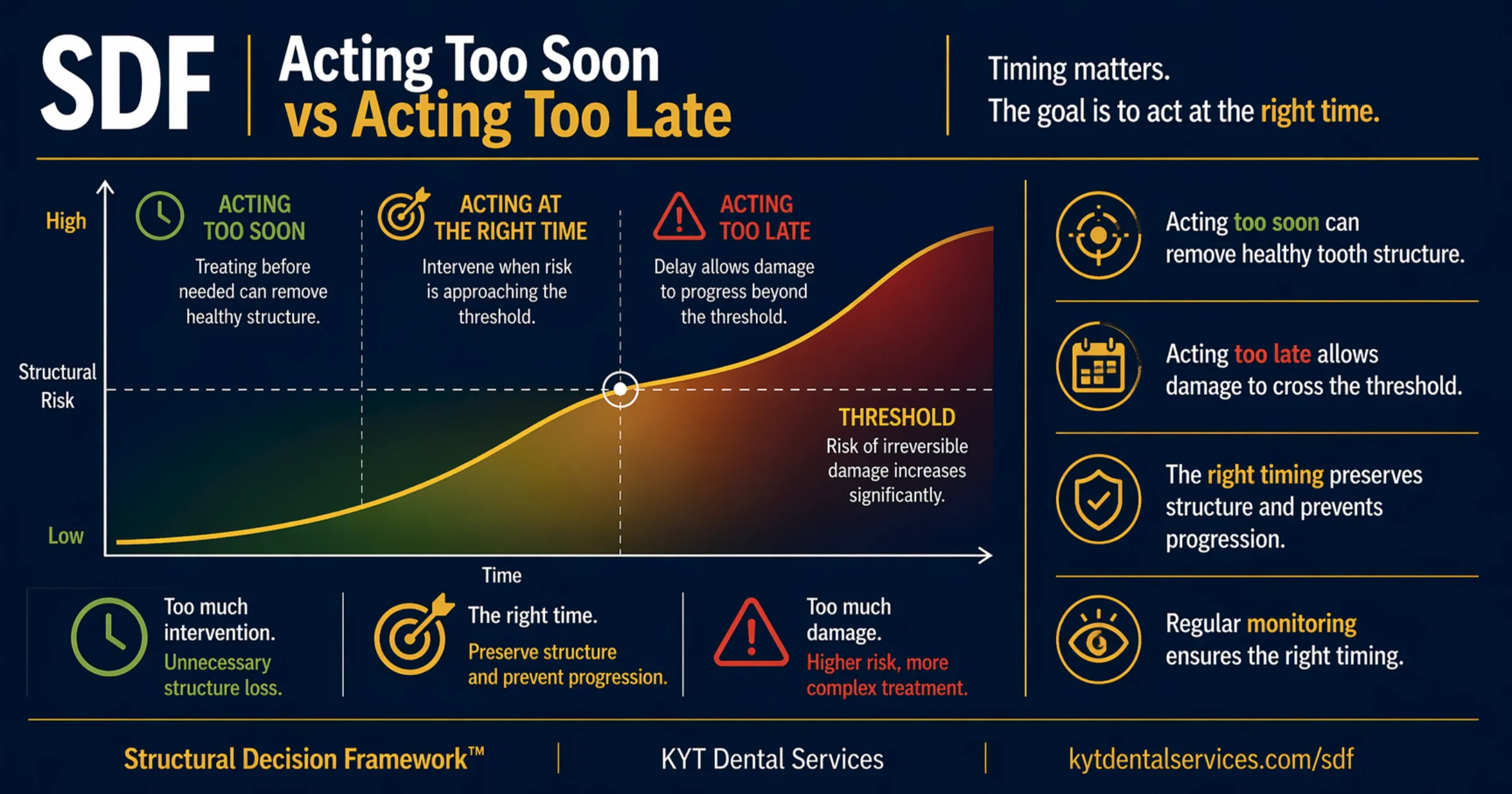
Acting Too Soon vs Acting Too Late

SDF-15

Acting Too Soon vs Acting Too Late

Bad timing costs structure in both directions. Acting too early removes healthy tooth. Acting too late lets damage cross the threshold. The goal is the right time, not the safest one.

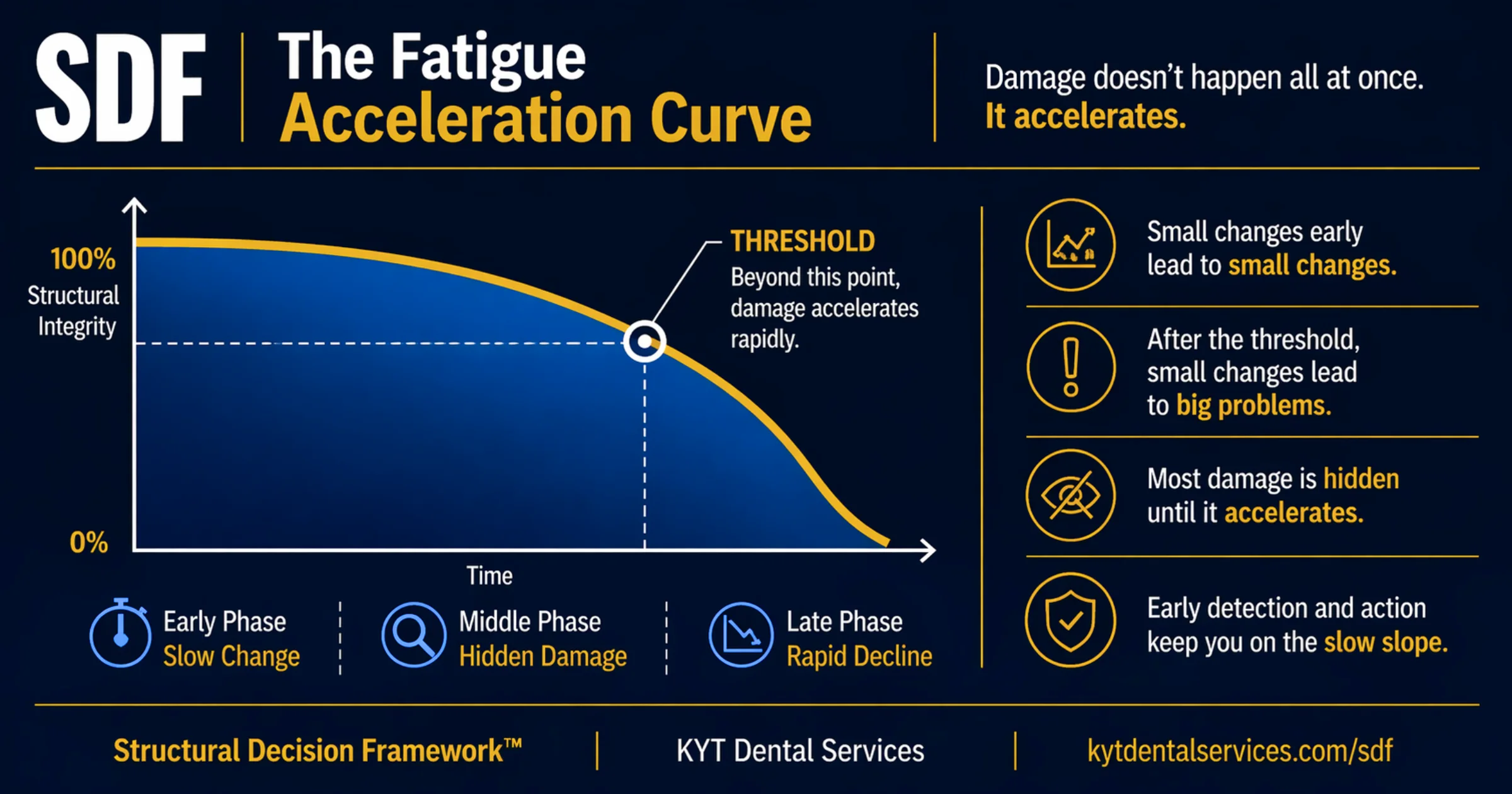
The Fatigue Acceleration Curve

SDF-16

The Fatigue Acceleration Curve

Damage doesn't happen all at once, and it doesn't happen at a steady pace. It compounds. Small changes early stay small. Small changes late don't.

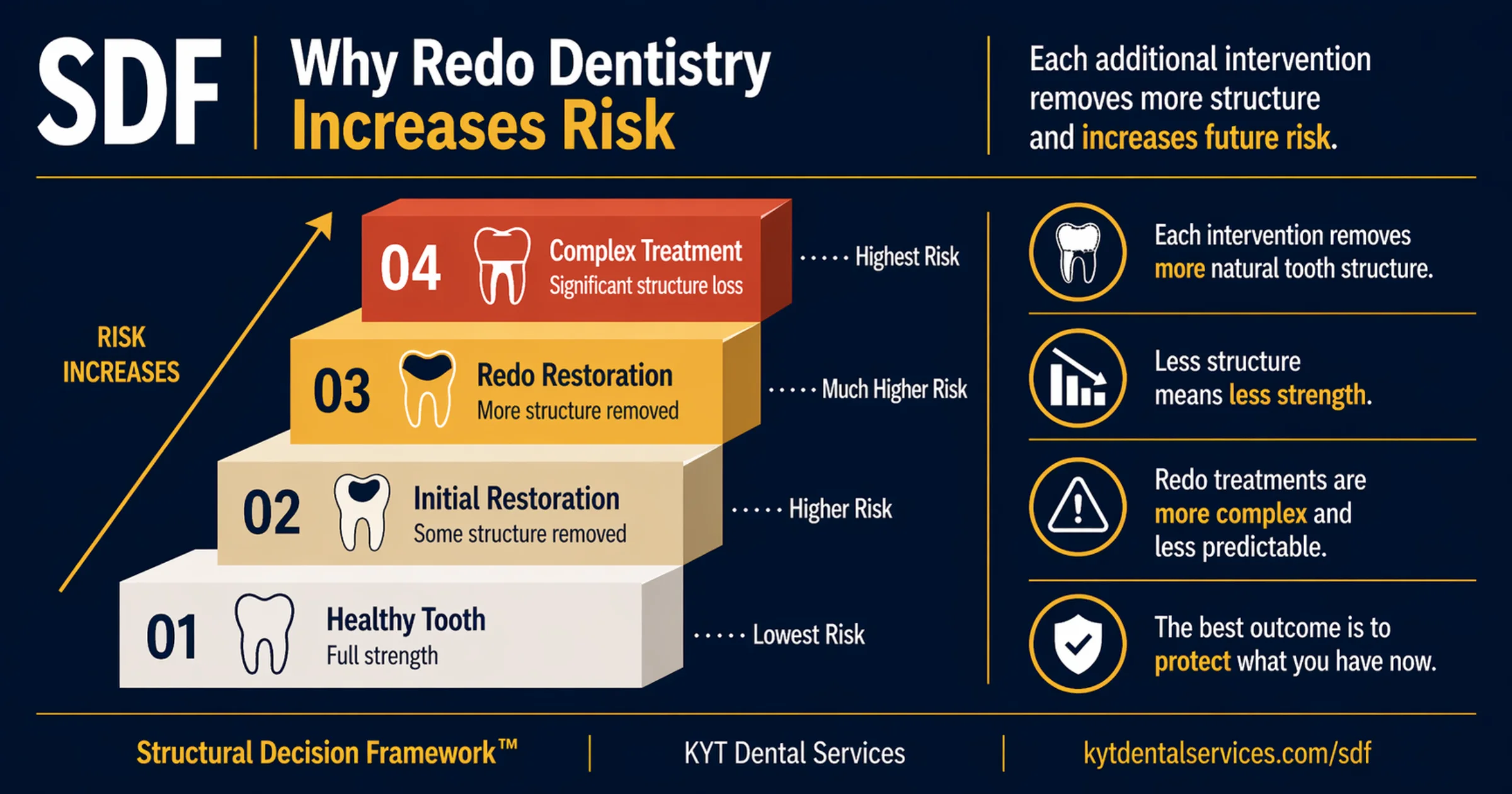
Why Redo Dentistry Increases Risk

SDF-17

Why Redo Dentistry Increases Risk

Every redo costs more structure than the one before it. The repair cycle is what turns a small filling, slowly, into a root canal and a crown.

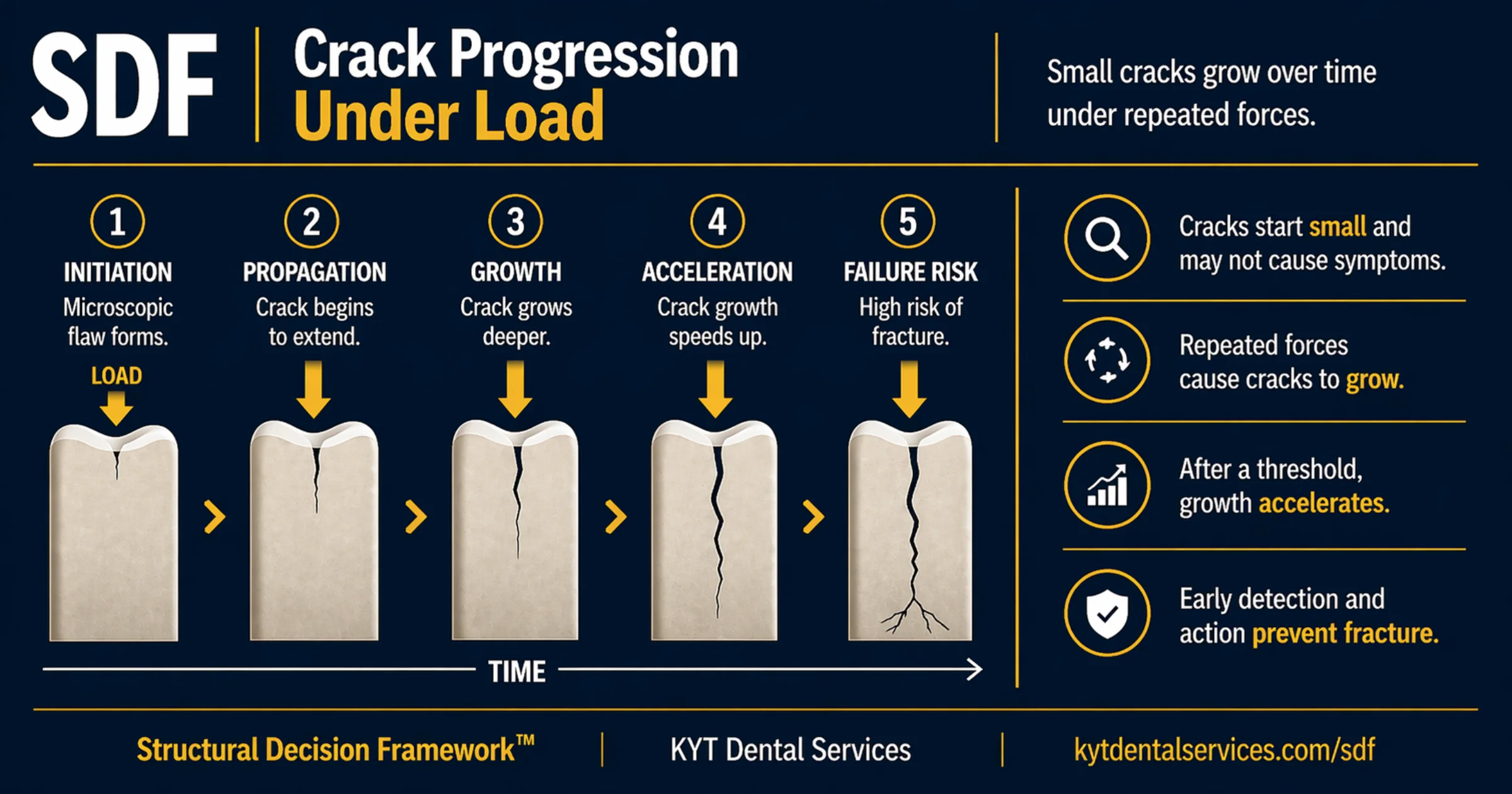
Crack Progression Under Load

SDF-18

Crack Progression Under Load

Cracks don't grow at a steady rate. They start microscopic and silent, slowly extend under repeated forces, and past a threshold they accelerate fast. Catching one in the early phase is what keeps it from reaching the late one.

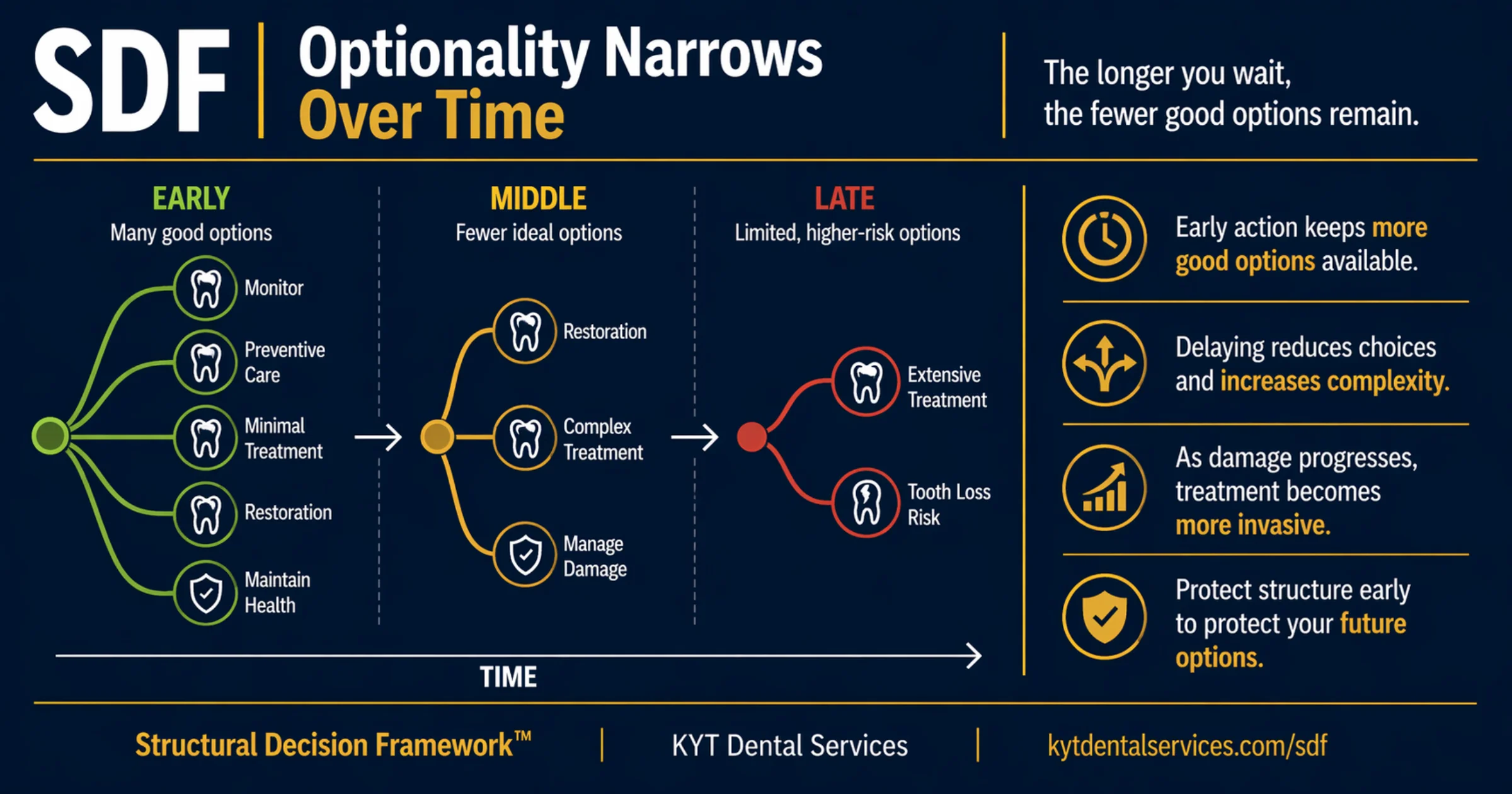
Optionality Narrows Over Time

SDF-19

Optionality Narrows Over Time

Early on, almost every option is on the table. As damage progresses, choices fall off the menu. The longer you wait, the smaller the menu, and the more invasive what's left becomes.

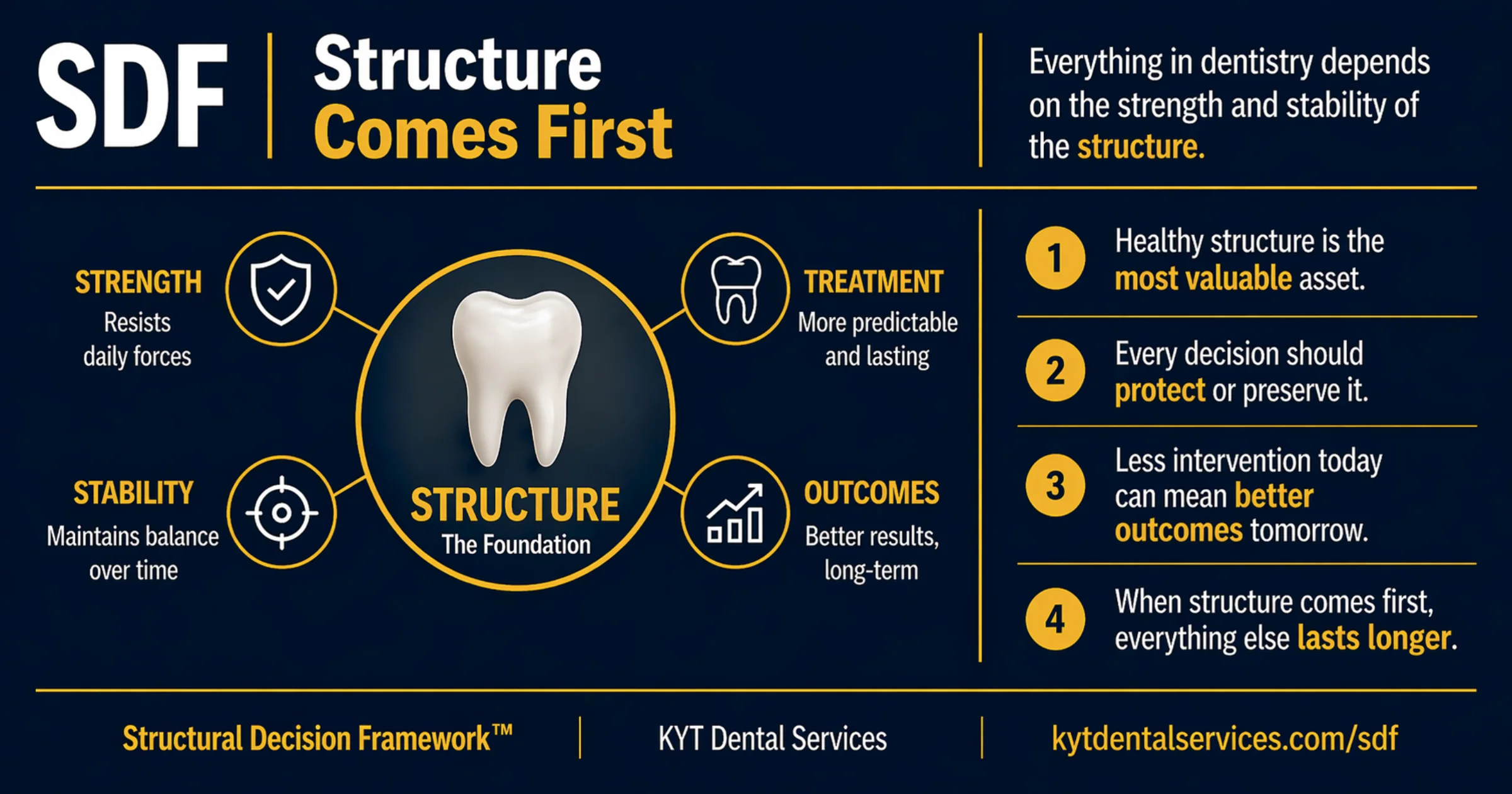
Structure Comes First

SDF-20

Structure Comes First

Everything in dentistry, strength, stability, the longevity of every treatment, the outcomes that follow, depends on the structure of the tooth itself. Structure is the foundation. Everything else is built on top of it.

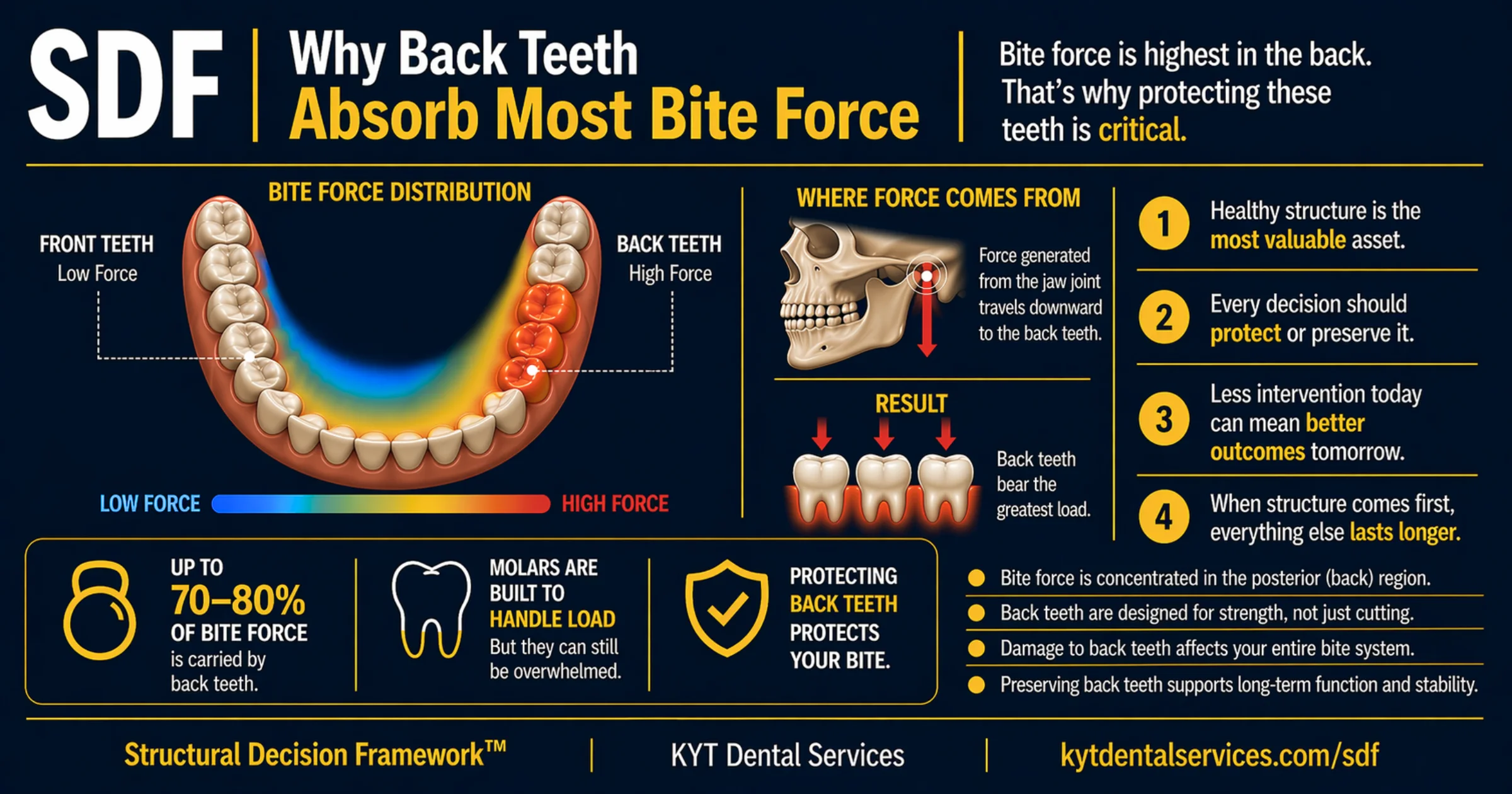
Why Back Teeth Absorb Most Bite Force

SDF-21

Why Back Teeth Absorb Most Bite Force

Your back teeth carry up to 70-80% of every bite. They're closer to the jaw joint, designed for strength, and they take the brunt of the load every time you chew. That's also why they're the teeth that fail first when forces aren't managed.

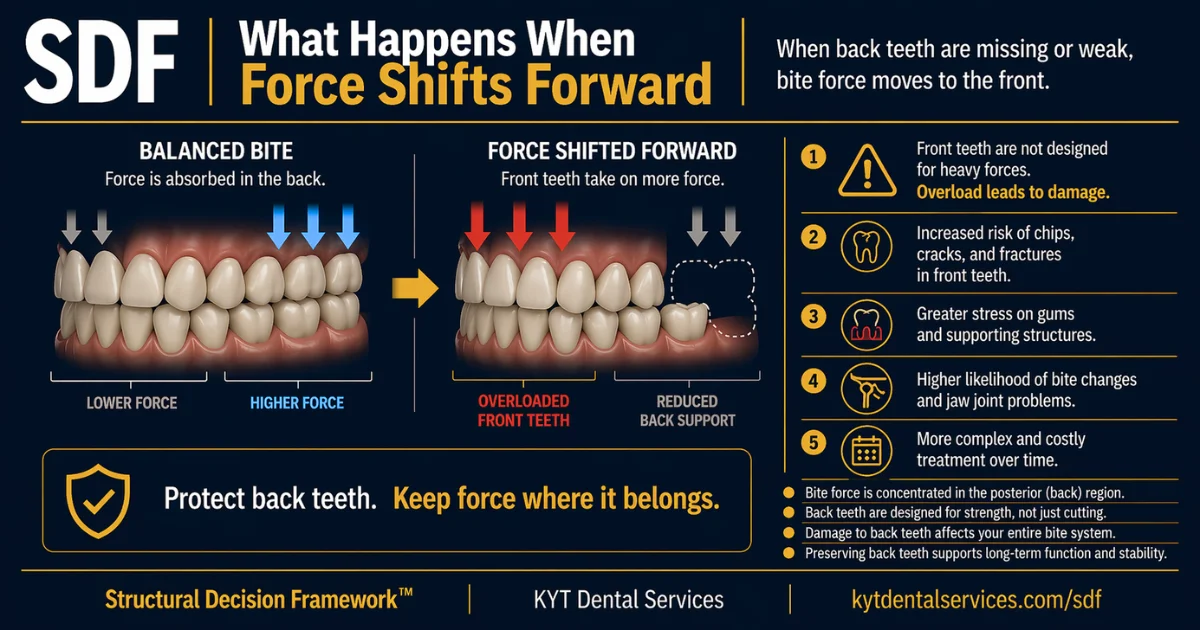
What Happens When Force Shifts Forward

SDF-22

What Happens When Force Shifts Forward

When back teeth are missing or weakened, the bite force they used to absorb has to go somewhere, and it moves forward, onto teeth that weren't built for it. Front teeth chip, gums get stressed, the jaw joint changes, and the cost of the next round of treatment goes up.

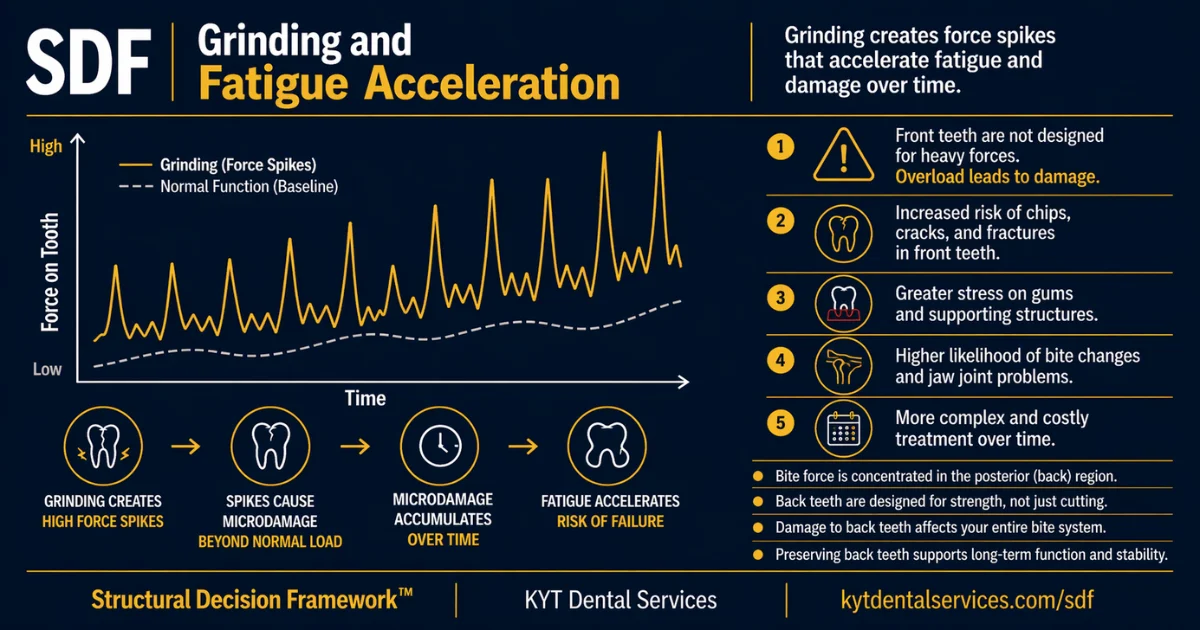
Grinding and Fatigue Acceleration

SDF-23

Grinding and Fatigue Acceleration

Normal chewing is rhythmic and moderate. Grinding is a series of force spikes that overshoot what the tooth was built to absorb, and each spike adds microdamage. Over time, fatigue compounds and the tooth's ability to handle even normal forces drops.