Aging Patterns in Teeth
Lesson 01 · Structural Decision Framework
In plain English
We see this all the time: a 65-year-old patient who's never had a cavity. Brushes twice a day. Then she bites into a piece of granola and her back tooth cracks.
She's furious, not at us, at the tooth. "It was fine yesterday."
Here's the thing: it wasn't.
That tooth had three old fillings under the surface from decades ago. She grinds at night, like a lot of people do. The enamel was worn down a little more every year. Nothing dramatic, ever. Just a slow, quiet withdrawal, fix by fix, year by year, from the same account.
By the time she bit into that granola, the tooth had been running on its last bit of strength for years. The crack wasn't the disaster. The crack was just the day the math finally ran out.
This is the part most people don't realize:
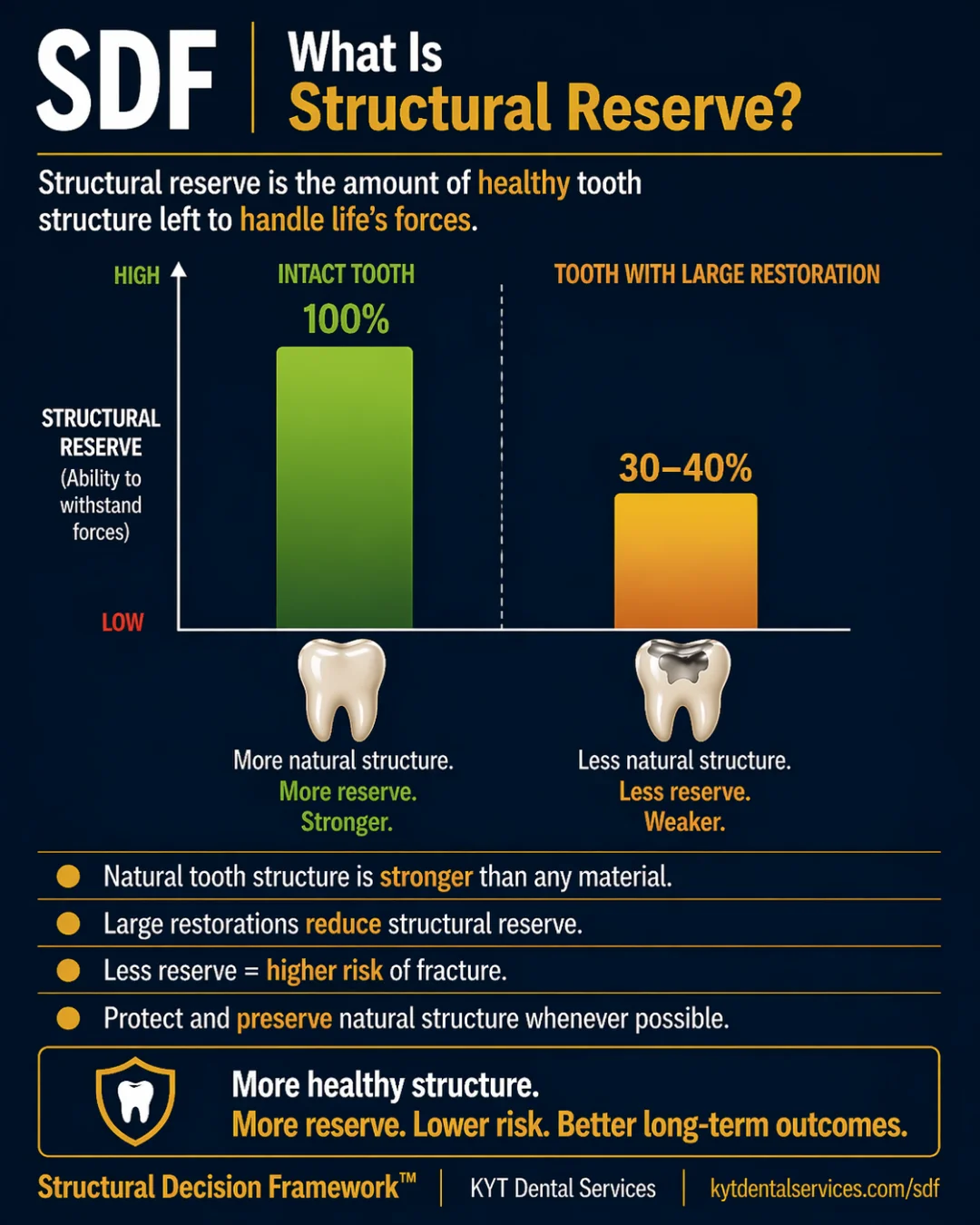
Every tooth has a kind of strength budget. The natural toughness it was born with. Each filling spends a little. Each crack spends more. Each year of grinding takes another slice. And nothing, no toothpaste, no supplement, no procedure, puts strength back in.
So when your dentist looks at a tooth that "feels fine" and says it might need work soon, they aren't reading the present. They're reading what's coming. They're looking at how much strength is left, how fast it's being spent, and whether the next hard bite is going to be the granola moment.
The tooth that breaks first is almost never the one that hurts. It's the one that's quietly run out.
If you've ever wondered why a dentist would touch a tooth that doesn't hurt, this is why.
The Lesson
One idea. One lesson.
Every idea in the Structural Decision Framework gets its own lesson. Hover to feel the foil.
SDF-01
StructureAging Patterns in Teeth
Teeth lose strength as you age. The losses add up.
↓ Open the model
Inside the Model
Read the diagram.
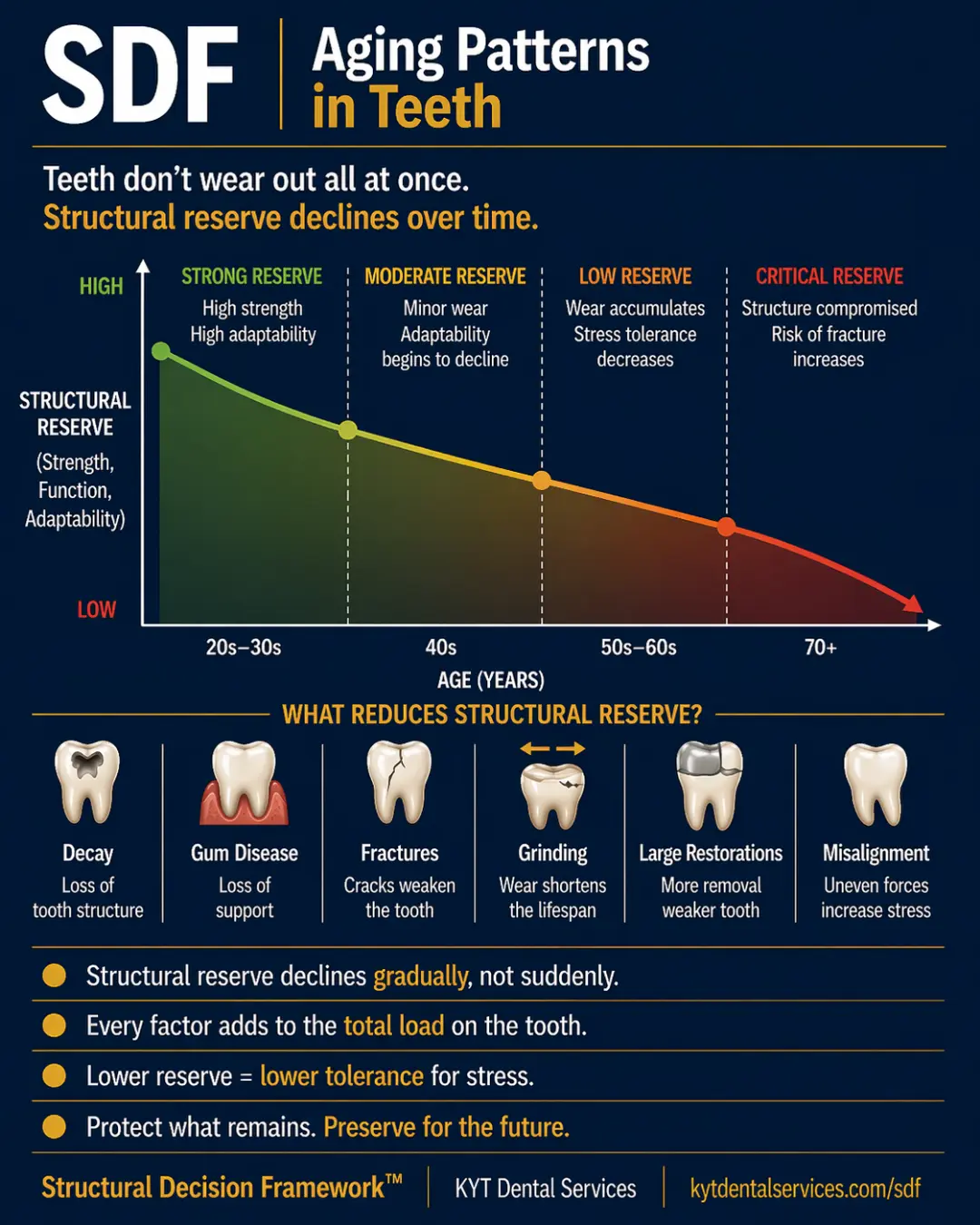
Every tooth has a kind of strength budget, the natural toughness it was born with. Each filling spends a little of it. Each crack, each year of grinding, each round of wear takes a little more. The Aging Patterns card asks the one question every dentist is really weighing: how much strength does this tooth have left, and how fast is it being spent?
Fig. 01 · Aging Patterns in Teeth
SDF Framework
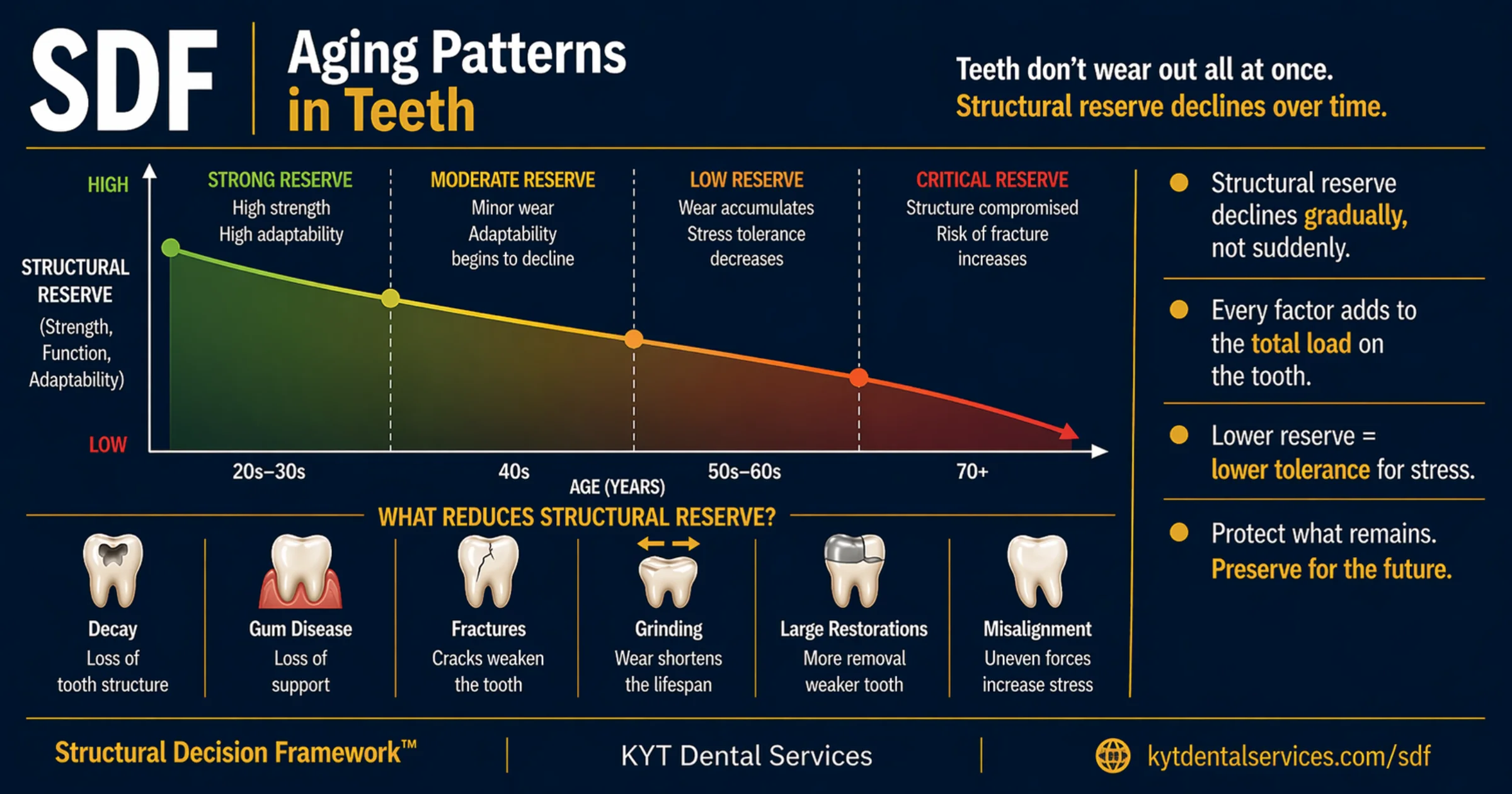
Teeth don't break out of nowhere. They lose strength slowly, year after year, fix after fix, until one day they can't take any more.
Explanation
As the enamel wears down and small stresses build up inside the tooth, it becomes easier for the tooth to crack or get a cavity.
Key takeaways
- Teeth weaken slowly. Most damage doesn't happen all at once.
- Fixing things early keeps more of your real tooth.
- Waiting almost always means a bigger fix later.
In the chair
How it shows up.
01
The 65-year-old back tooth that's never had a cavity
It looks fine. No pain, no soft spots. But there are three big fillings under the surface, and you grind your teeth at night. Even though nothing hurts, the tooth's strength budget is running low. The next bite of something hard could be the moment it cracks. The decision isn't about right now, it's about what's coming.
02
The hairline crack that doesn't hurt
A thin vertical line shows up on a tooth. No pain, no real break, nothing you can feel. But that line means the tooth is using up the last of its strength to hold itself together. Watching it isn't really doing nothing, it's a choice to bet on the next chew.
03
Going too big on a young tooth
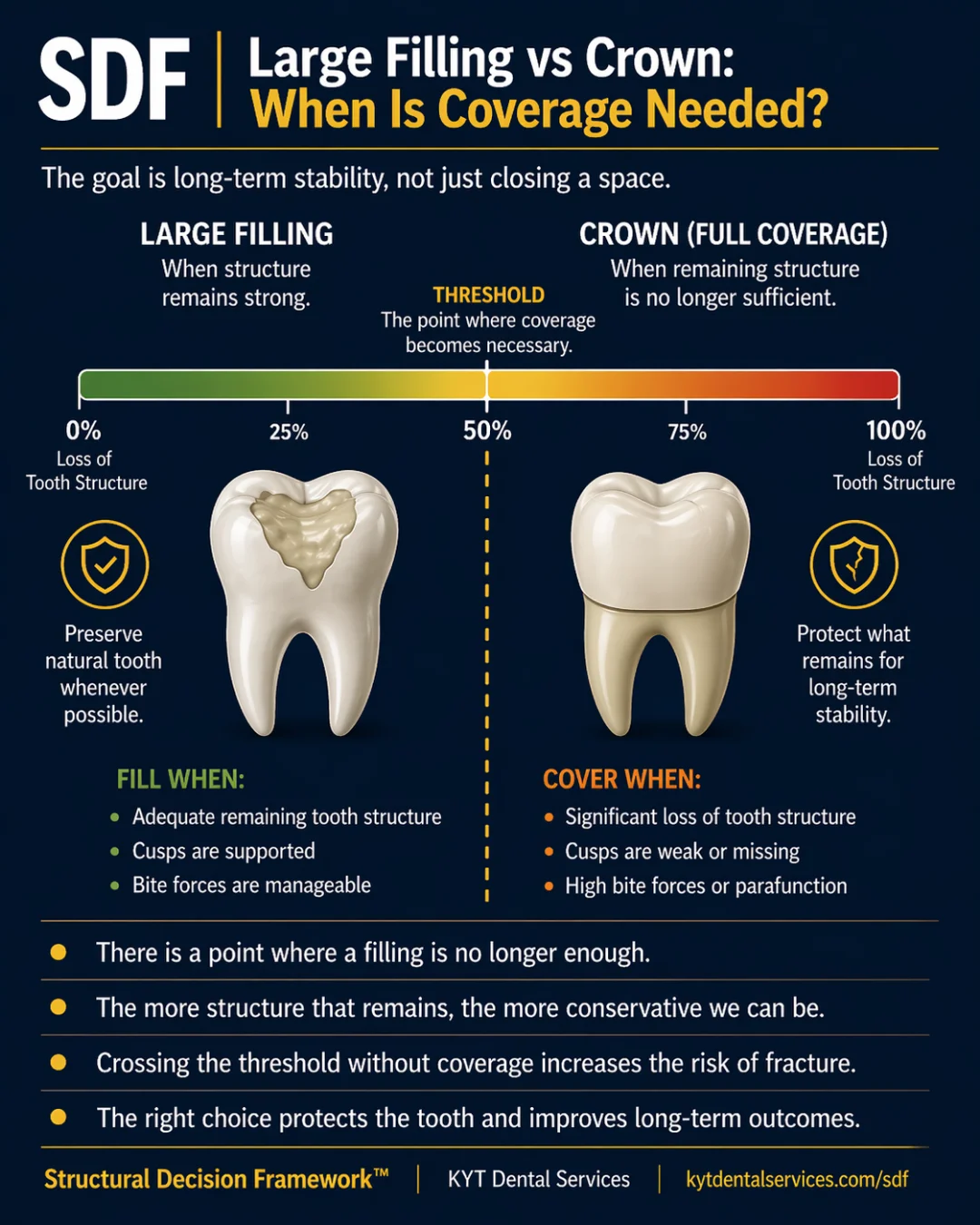
A 28-year-old with one medium filling. The tooth has plenty of strength left. The right move is the smallest fix that solves the problem, save the rest for later. The same tooth in a 60-year-old with three previous fillings is a completely different decision.
Through other lenses
The same idea, three other ways.
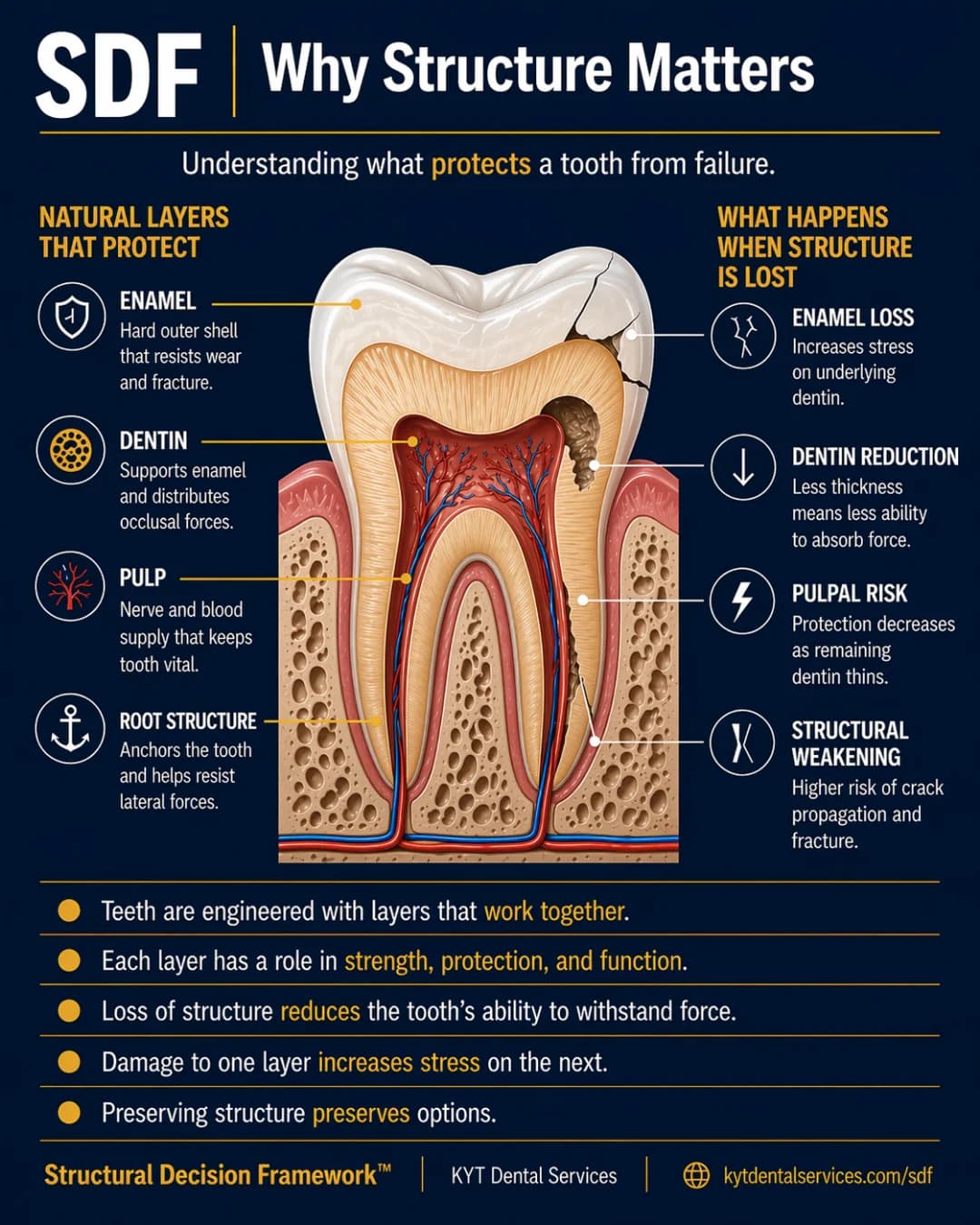
How hard you bite, whether you grind, and whether your teeth meet evenly all change the math. The same starting strength runs out a lot faster under heavy or uneven force.
Strength only goes one way, out. Every filling, every crack, every year is a withdrawal from the same account. Nothing puts it back in.
The best fix isn't always the one that feels right today, it's the one that leaves your tooth strongest five years from now. That's the question worth asking before any procedure.
Common questions
FAQ.
Can a tooth get its strength back?+
No. The strength a tooth has is the strength it has, once it's gone, it's gone. Treatment can slow how fast it runs out, or protect what's left, but nothing puts strength back into a tooth.
What's the difference between this and cavity risk?+
Cavity risk is about what might go wrong, bacteria, sugar, weak spots. Strength is about what's already been spent. A tooth with no cavities and great brushing habits can still be running low on strength.
Does this just come down to age?+
Not really. Age matters, but how you've used your teeth matters more. A 35-year-old who grinds at night and has had three crowns can have less strength left than a healthy 70-year-old who's never had a major dental problem.
When is a tooth too far gone to save?+
When the next thing that happens to it, a hard bite, a new crack, another cavity, would be more than it can take. The trick is looking one step ahead, not just at how the tooth feels right now.
If my tooth feels fine, why do I need anything done?+
Because feeling fine and being fine aren't the same thing for teeth. A tooth can feel completely normal while it's running low on strength. By the time it actually hurts, the options are usually fewer and bigger. Acting before pain shows up is how you keep more of your real tooth.
See this lesson in a real case
The story behind this lesson.
A patient case where this idea showed up in the chair.
See it in real teeth
From idea to actual cases.
This site explains the idea. The clinical version, with real cases, real X-rays, and what this looks like in actual mouths, lives at KYT Dental Services, the practice this framework comes from.
See it on KYT Dental Services →Keep going